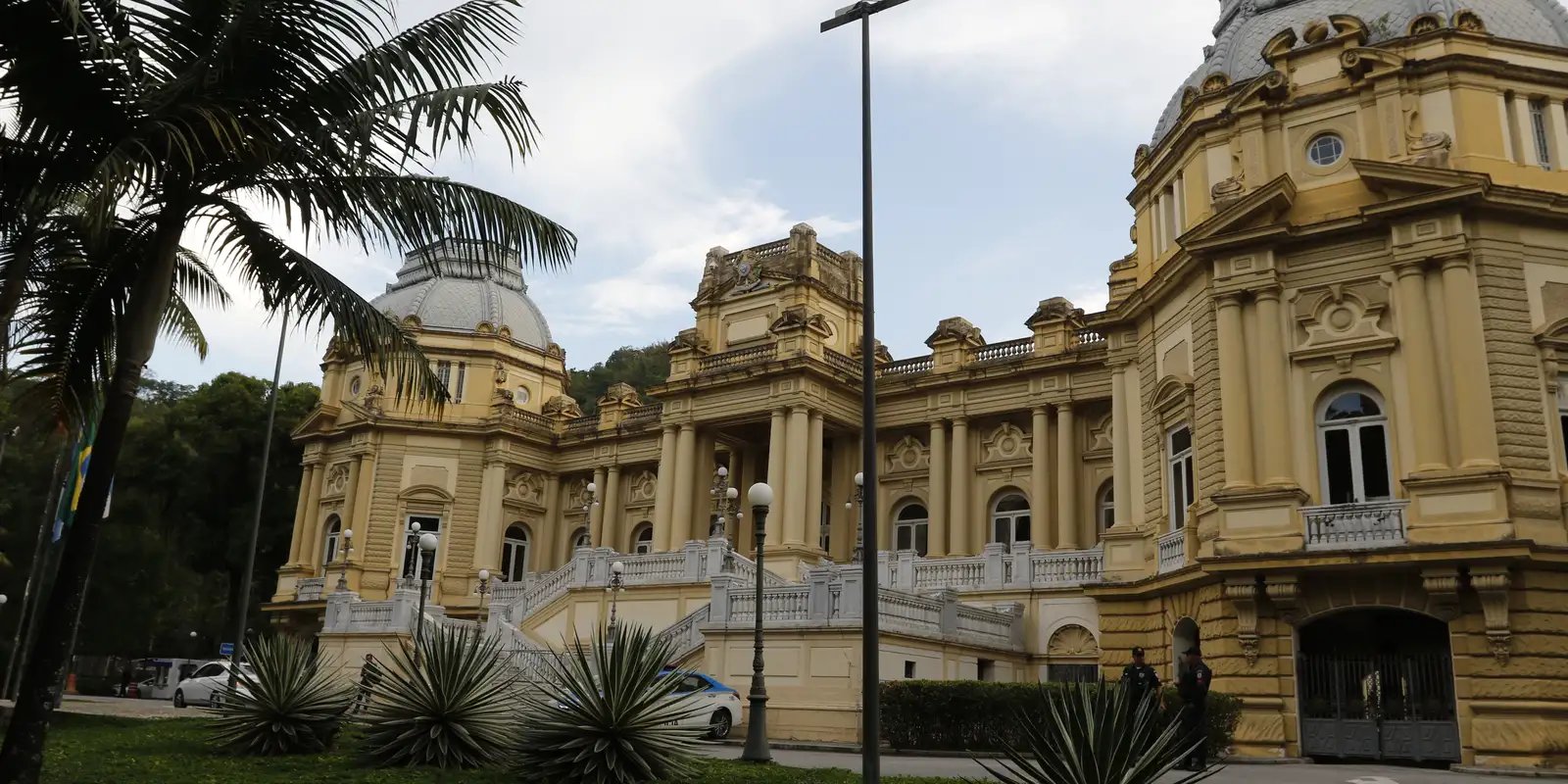
The Supreme Federal Court (STF) of Brazil reached a 4-1 decision on Thursday in favor of holding indirect elections for the interim governor of Rio de Janeiro. Despite the partial consensus, the judgment was suspended following a request for review by Justice Flávio Dino. No date has been set for the case to resume.
With the suspension, Ricardo Couto de Castro, president of the Rio de Janeiro Court of Justice (TJRJ), will continue to serve as the interim governor. The Supreme Court is reviewing a case in which the state branch of the PSD party advocates for direct elections for the interim leadership of the state.
The judgment began during Wednesday’s session. The first to vote, Justice Cristiano Zanin, the case’s rapporteur, supported direct elections, meaning voters would cast their ballots electronically. He argued that former Governor Cláudio Castro’s resignation to run for a Senate seat, a day before his conviction by the Superior Electoral Court (TSE), was an “attempt to circumvent” the call for popular elections.
Subsequently, Justice Luiz Fux voted for indirect elections, which involve deliberation by the deputies of the Rio de Janeiro Legislative Assembly (Alerj). In today’s session, Justice Flávio Dino requested a review of the process, stating he intends to await the publication of the TSE’s ruling that rendered Castro ineligible before casting his vote.
Following the suspension, Justices André Mendonça, Nunes Marques, and Cármen Lúcia, who also serve on the TSE, preemptively cast their votes in favor of indirect elections. Mendonça stated there was no misuse of purpose in Castro’s resignation to run for the Senate. “I do not believe it is possible to deduce that the unilateral act of resignation was a ploy to avoid the impending judgment,” he asserted.
Justice Nunes Marques argued that Castro’s resignation was to meet the deadline for disqualification. Thus, indirect elections should be held. “It does not seem reasonable, just months before the general elections in October, to hold a supplementary election for the positions of governor and vice-governor, followed by a new election for the same positions,” he justified.
Justice Cármen Lúcia stated that no one is unaware of the severe situation in Rio, which she described as experiencing “deinstitutionalization.” “The people of Rio de Janeiro deserve the right to an honest government, the right to decency, to ethics, which is inherent in any democratic state,” she added.
The election for the interim mandate is necessary because the state’s line of succession is depleted. On March 23, former Governor Cláudio Castro was declared ineligible by the TSE. As a result of the conviction, the court ordered indirect elections for the interim mandate.
However, the PSD appealed to the Supreme Court, advocating for direct elections. The day before the judgment, Castro resigned to meet the disqualification deadline to run for the Senate. He could have left office until April 4. The move was seen as a maneuver to force indirect rather than direct elections. With his resignation, the former governor could influence the indirect election of an ally for the interim government. A direct election could favor Eduardo Paes of the PSD, a pre-candidate for the governorship of Rio.
Former Vice Governor Thiago Pampolha left office in 2025 to take a position at the state’s Court of Accounts. Since then, the state has had no vice governor. The next in line would be the president of Alerj, State Deputy Rodrigo Bacellar. However, the lawmaker was ousted in the same TSE decision that condemned Castro and has already left office. Before the decision, Bacellar was also removed from the presidency of the House by a decision of Justice Alexandre de Moraes of the Supreme Federal Court (STF). He is under investigation in a case involving former Deputy TH Joias. Currently, the president of the Rio de Janeiro Court of Justice (TJRJ), Ricardo Couto de Castro, serves as the interim governor of the state.
Source: Agência Brasil.
Original published at O Cafezinho.