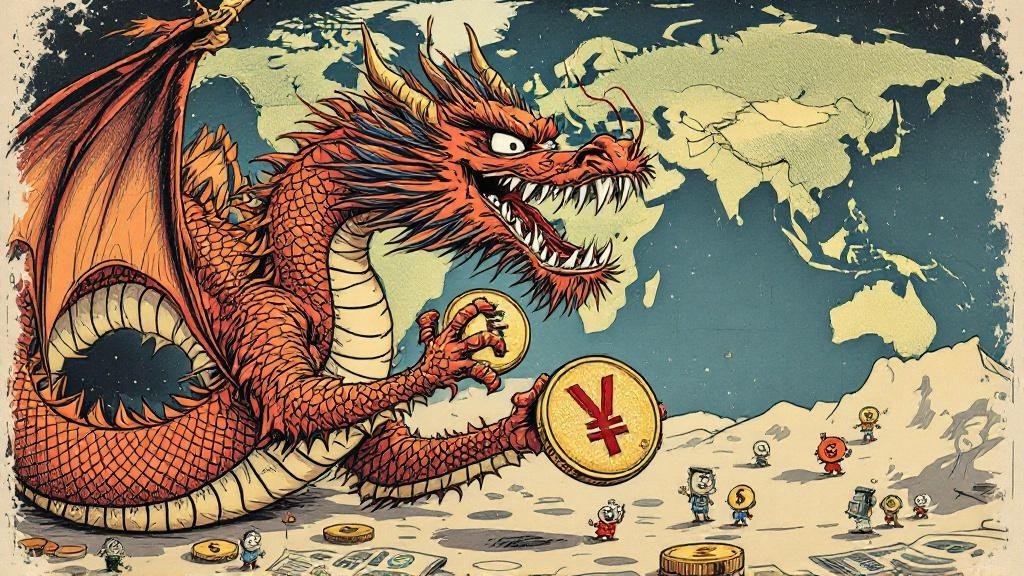
With over 260 million active wallets and trials in 26 cities, the digital yuan is already the largest state-backed currency experiment in history — and it is changing the architecture of money, not just the method of payment. Chinese officials view the digital yuan not merely as a product, but as a foundational necessity, as highlighted by Agustín Carstens, General Manager of the Bank for International Settlements, during IMF discussions.
The digital yuan, which began as a form of digital cash, was recently integrated into the Chinese banking system, adopting characteristics of a deposit system. This shift, implemented in early 2026, prevents the withdrawal of deposits from banks, thereby strengthening financial institutions rather than competing with them. The integration of the digital yuan into banks’ balance sheets and interest rate structures alters its nature and raises questions about what distinguishes this digital currency from traditional money.
One of the most innovative aspects of the digital yuan is its programmability. This feature enables automatic payments based on pre-established conditions, such as the use of subsidies exclusively within specific sectors. This allows governments to direct economic policies with greater precision, influencing not only industries but also specific consumer behaviors.
The adoption of the digital yuan in China has been driven by state-led campaigns, with local governments distributing the digital currency directly to citizens. Despite hundreds of millions of digital wallets already in use, the digital yuan still shares the landscape with established platforms like Alipay and WeChat Pay, which dominate mobile transactions in the country. The transition is being implemented gradually, allowing consumer habits to adjust organically.
Beyond national borders, China is exploring the use of the digital yuan in international transactions. Pilot programs aim to integrate multiple countries onto shared platforms, offering an alternative to traditional payment systems that are often slow and opaque. This strategy not only seeks to augment China’s financial influence but also to establish a parallel system to the dollar, complete with its own rules and incentives.
While the digital yuan offers advantages in terms of speed and flexibility, it also raises concerns about privacy and surveillance. The concept of ‘controlled anonymity’ attempts to balance user privacy with the necessity of regulatory oversight, yet the line between privacy and governmental control remains thin.
The impact of the digital yuan extends beyond China’s borders. Other countries are observing closely, considering how elements of this approach could be adopted within their own economies. The capacity to transmit policies more effectively and with less friction could become an attractive model for other nations.
The digital yuan is redefining what constitutes public money in an increasingly digital world. As the use of physical cash declines, the presence of a state-backed digital alternative becomes crucial for ensuring the continuity of public money. The digital yuan does not replace existing systems but rather complements them, transforming the operational landscape.
For savers and investors, the issue is not abstract: programmable and state-traceable money alters what it means to control one’s own assets. Understanding how this model expands — and what alternatives exist — is no longer optional.
With information from preservegold.com.