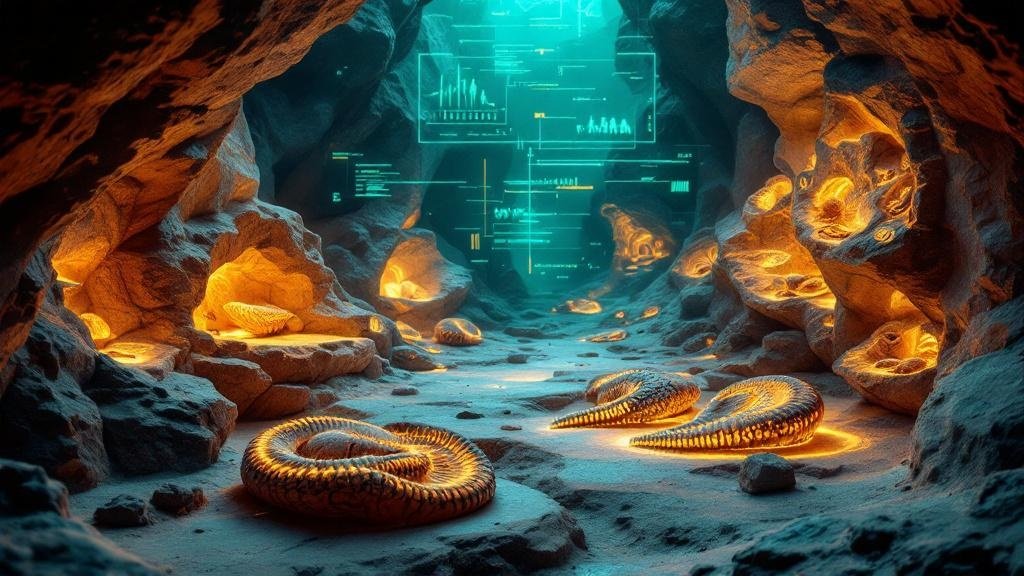
Recent fossil discoveries in China are challenging the traditional understanding of the evolution of complex life on Earth. Newly uncovered fossils suggest that complex life forms may have evolved millions of years earlier than previously believed.
Scientific consensus traditionally links the rapid diversification of animals to the Cambrian period, known for giving rise to many life groups that still exist today. However, an unprecedented collection of fossils found in China appears to predate this timeline. Researchers describe primitive complex creatures that precede what was previously accepted as the beginning of complex life.
This discovery, as reported by specialized sources, could revolutionize the understanding of how and when complex life emerged on our planet. The implications of this discovery are vast, leading to new questions about the development of biodiversity and the factors that influenced this early evolution.
The fossils found include multicellular organisms exhibiting characteristics not previously observed in fossils from earlier periods. They represent a significant milestone in the study of evolution, offering new perspectives on the pace and conditions that allowed for the emergence of complex biological structures.
Additionally, these discoveries may provide valuable insights into Earth’s primordial environments and how they influenced evolution. The environmental conditions that favored the emergence of complex life are a subject of intense research, and the new fossils may help clarify these aspects.
The scientists involved in the research emphasize the importance of revisiting and reevaluating evolutionary models in light of this new evidence. Understanding the conditions that allowed for the early emergence of complex life forms could have significant implications for the study of current biodiversity and the search for life on other planets.
These fossils also raise questions about life’s resilience and its ability to adapt to different environmental conditions. The ability of organisms to adapt to changing environments is a central theme in evolutionary biology, and these discoveries may offer new perspectives on this process.
Moreover, the discovery of these fossils in China highlights the importance of exploring diverse geographical regions to better understand Earth’s evolutionary history. Different environments may have offered unique conditions that favored the development of complex life at different times in the planet’s geological history.
As scientists continue to study these fossils, it is expected that new discoveries may emerge, offering even more information on the early evolution of complex life. These investigations are fundamental to deepening the knowledge of the origins of biodiversity and the processes that shaped life as we know it today.
Ongoing research not only expands the understanding of evolution on Earth but may also influence astrobiological studies, providing clues on how life might develop on other planets under similar conditions. The search for extraterrestrial life could benefit from the lessons learned from these discoveries, helping to identify environments that might harbor life elsewhere in the universe.
Original published at O Cafezinho.