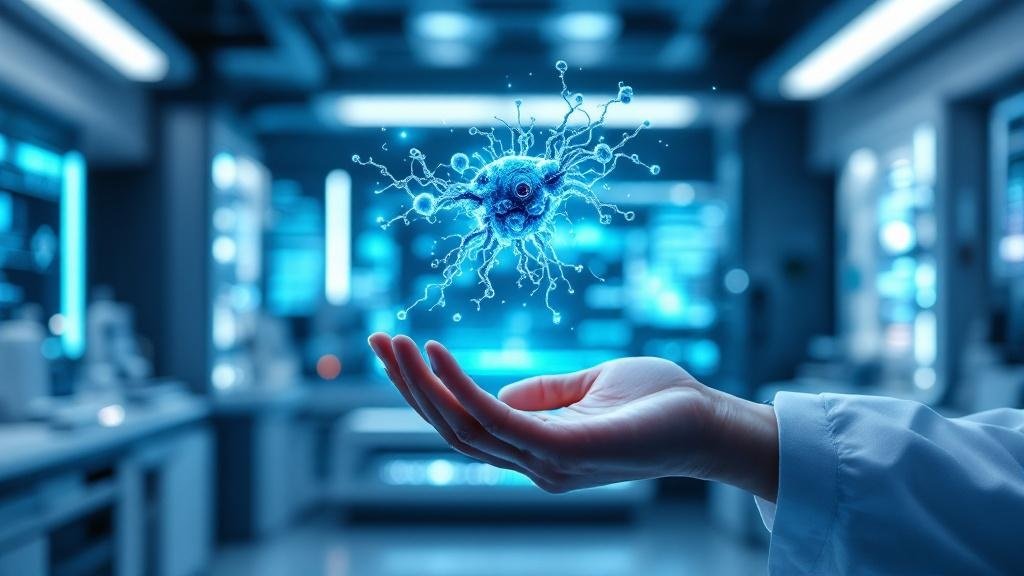
A significant breakthrough in bioengineering has been achieved with the creation of neurobots made from living cells, biological structures that develop autonomous processing systems.
These robots, constructed from cells of the frog species Xenopus laevis, independently organize into complex communication networks, offering transformative potential for medicine. The technology promises high-precision cellular interventions and intelligent treatments directly within the human body, reducing the need for invasive procedures.
As detailed in a study published in the journal Advanced Science on March 15, 2026, these biostructures operate without relying on external programming or metallic components, functioning effectively in microscopic environments.
Researchers observed that the cells spontaneously cluster, forming tissues that not only remain viable but also develop coordinated motor capabilities through vibratory cilia. This self-organization capability is fundamental for the development of synthetic living systems that replicate natural biological functions in a controlled and predictable manner, as explained by the study authors led by the University of Vermont, USA.
The neurobots, derived from frog embryonic stem cells, form a rudimentary neural network that processes information and allows autonomous navigation in liquid environments.
Unlike traditional electronic devices, these entities are flexible, biodegradable, and possess regenerative capabilities in adverse conditions. The absence of synthetic materials minimizes the risk of immune rejection and eliminates the possibility of contamination by microplastics or heavy metals in the body, highlighting their potential for safe clinical applications.
The central innovation of these biobots lies in decentralized processing, where each cell contributes to collective behavior without the need for chips or hardware.
This allows for more natural responses to chemical and physical stimuli, overcoming the limitations of conventional computational algorithms. Moreover, their organic composition ensures they decompose after completing their functions, with the ability to autonomously repair structural damage, as noted by scientists in the research report published on the Advanced Science portal.
These biological structures demonstrate emerging intelligence, resulting from the electrical and chemical interaction between integrated neurons.
With this capability, they can identify obstacles and follow chemical gradients to reach specific targets within the human circulatory system. Such ability is seen as a crucial step for targeted drug delivery and the removal of fat plaques in arteries, offering less invasive solutions for cardiovascular conditions.
Among the most promising medical applications are regenerative medicine and early diagnosis. Neurobots can act as microscopic agents in the reconstruction of damaged tissues, such as muscles or nerves, in hard-to-reach areas.
They also have the potential to detect toxins or disease markers, such as cancer cells, before they become visible in traditional imaging exams, enabling interventions in the early stages of serious pathologies.
Despite the enthusiasm, technical challenges persist. Increasing the longevity of these cells outside controlled laboratory environments is a priority to enable their clinical use.
Scientists are investigating methods to continuously supply nutrients, ensuring that the biobots maintain their functionality for extended periods. Ethical and safety issues are also under debate, with the need for rigorous protocols to prevent any risk of unwanted proliferation in the human body. Nevertheless, the advances indicate a promising future for this technology in healthcare.
With information from olhardigital.com.br.
Original published at O Cafezinho.