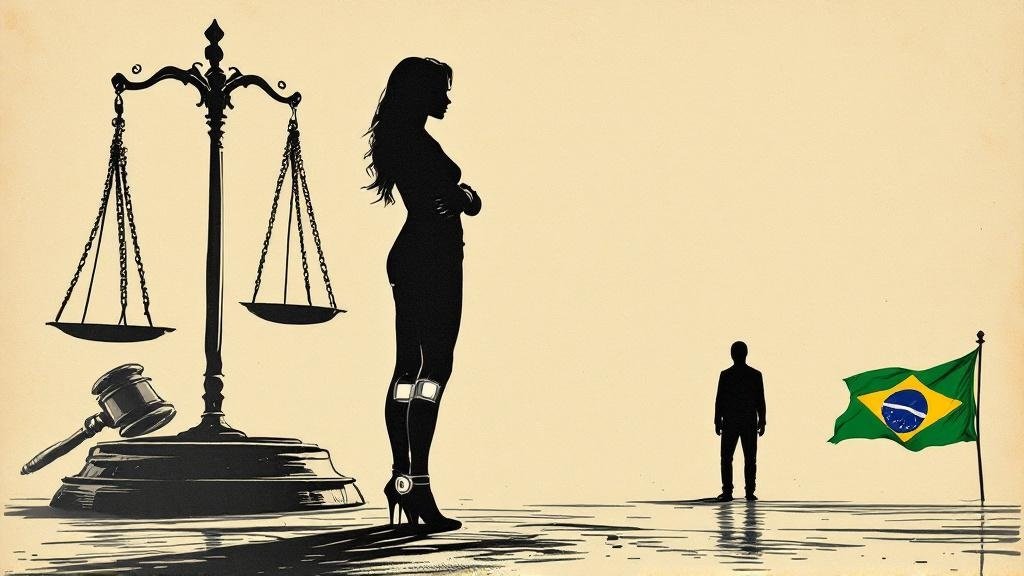
On April 9, 2026, President Luiz Inácio Lula da Silva enacted three new laws aimed at intensifying the fight against violence towards women. During a ceremony at the Planalto Palace in Brasília, Lula emphasized the need to address the structural roots of this social issue and criticized the spread of harmful content on digital platforms, which, according to him, exacerbate the sense of impunity and perpetuate violent behaviors.
Among the enacted measures, one law mandates the immediate application of electronic ankle bracelets on offenders involved in domestic violence cases, especially when there is a risk to the lives of women and children.
This measure, previously a possibility under the Maria da Penha Law, can now be ordered by police officers in areas without a judge’s presence. The legislation also prioritizes the use of the device in cases of non-compliance with protective measures and increases penalties for offenders who violate such judicial orders.
Another law classifies as a heinous crime the act of vicarious homicide, which involves the murder of children or close relatives with the intent to cause emotional suffering to a woman. Penalties for this type of crime now range from 20 to 40 years in prison, reflecting the severity of the psychological and physical violence associated with these acts.
The third legislation establishes the National Day of Protection and Combat Against Violence Towards Indigenous Women, to be celebrated annually on September 5, aiming to highlight the specific challenges faced by this population.
During the event, Lula stressed that while the creation of laws is essential, it does not definitively solve the problem without complementary actions. He advocated for robust investments in education as a tool to address the deep-rooted causes of violence, arguing that without a pedagogical approach from childhood, the results will be limited.
The president also pointed out the role of the digital environment in perpetuating aggressive behaviors, criticizing the lack of control over content that encourages violence and disrespect for social norms.
Lula further emphasized the importance of a broad cultural shift, involving not only the federal government but also the National Congress, the Judiciary, and civil society. He questioned how to educate new generations to become respectful adults aware of the rules of coexistence.
Additionally, he mentioned the barrier faced by many victims who avoid reporting due to fear or distrust of institutions, reinforcing the need for policies that combine strict punishment, effective protection, and long-term social transformation.
According to the portal Carta Capital, the measures represent a significant advancement in protecting women but also highlight the challenges of implementation in a country marked by regional inequalities and structural limitations in the justice system. The expectation is that the new laws, combined with consistent public policies, can reduce the alarming rates of gender-based violence in the country.
Original published at O Cafezinho.