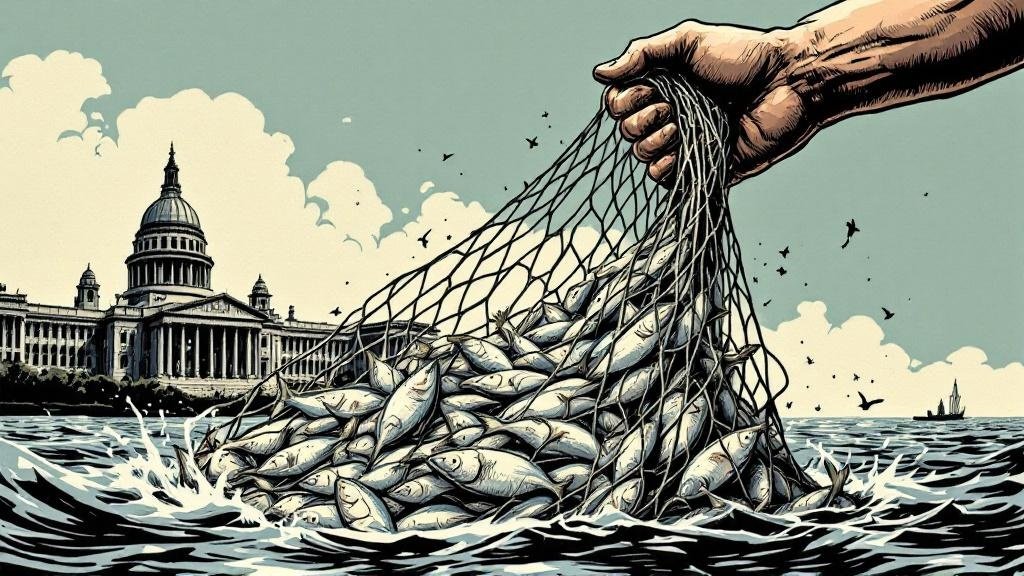
The Federal Senate approved on Wednesday the provisional measure establishing a $7.9 billion cap for fishing insurance in 2026. This benefit is intended for artisanal fishermen during the fishing prohibition period. The decision resulted from an agreement between the government and the opposition during the plenary vote.
Senate President Davi Alcolumbre directly coordinated with the Speaker of the House, Hugo Motta, to ensure that the new text is voted on in the House this week, before the measure expires. The provisional measure underwent five significant changes in the conversion bill, which is the name given to provisional measures after being modified in Congress.
Among the changes, the possibility of retroactive payment of fishing insurance for periods before 2026 was excluded. However, the government’s leader in the Senate, Jaques Wagner, stated that if beneficiaries entitled to these payments are identified, the government may send a new measure to authorize the releases.
The value of the fishing insurance will be equivalent to the minimum wage, which in 2026 is $1,621. One of the changes proposed by the rapporteur, Senator Beto Faro, requires artisanal fishermen to have biometric registration. Additionally, the periodicity for submitting fish sale tax documents was set at least every six months in the 12 months preceding the start of the prohibition period, or through proof of social security contributions during the activity period.
Another significant change was the requirement for authentication for beneficiaries to access the digital systems of the Ministry of Fisheries. The plenary decided that this identification cannot be done by public servants or representative entities of artisanal fishing but through biometric validation, concentrating control in state agencies to prevent fraud.
During the discussion, opposition senators raised concerns about fraud in the granting of fishing insurance. Senator Jorge Seif, former Secretary of Fisheries in the Jair Bolsonaro government, claimed to have canceled 300,000 fishing insurances during his tenure, alleging that the number of fishermen increased significantly under the current government.
Rapporteur Beto Faro emphasized that the provisional measure was designed to punish fraud without harming those who are genuinely entitled to the benefit. According to him, about 500,000 fishermen in the country did not receive last year’s fishing insurance, and many are still awaiting payments from previous years.
With the approval of the measure, the government seeks to balance the need for control and oversight of the benefit with ensuring that fishermen who truly depend on the fishing insurance are not harmed. The $7.9 billion cap aims to prevent abrupt cuts and ensure that resources are sufficient to cover all anticipated beneficiaries. However, if the limit is reached, there is a risk that some fishermen may not receive the benefit payment, directly impacting the economic sustainability of thousands of families who rely on artisanal fishing as their primary source of income.
With information from www1.folha.uol.com.br.
Original published at O Cafezinho.