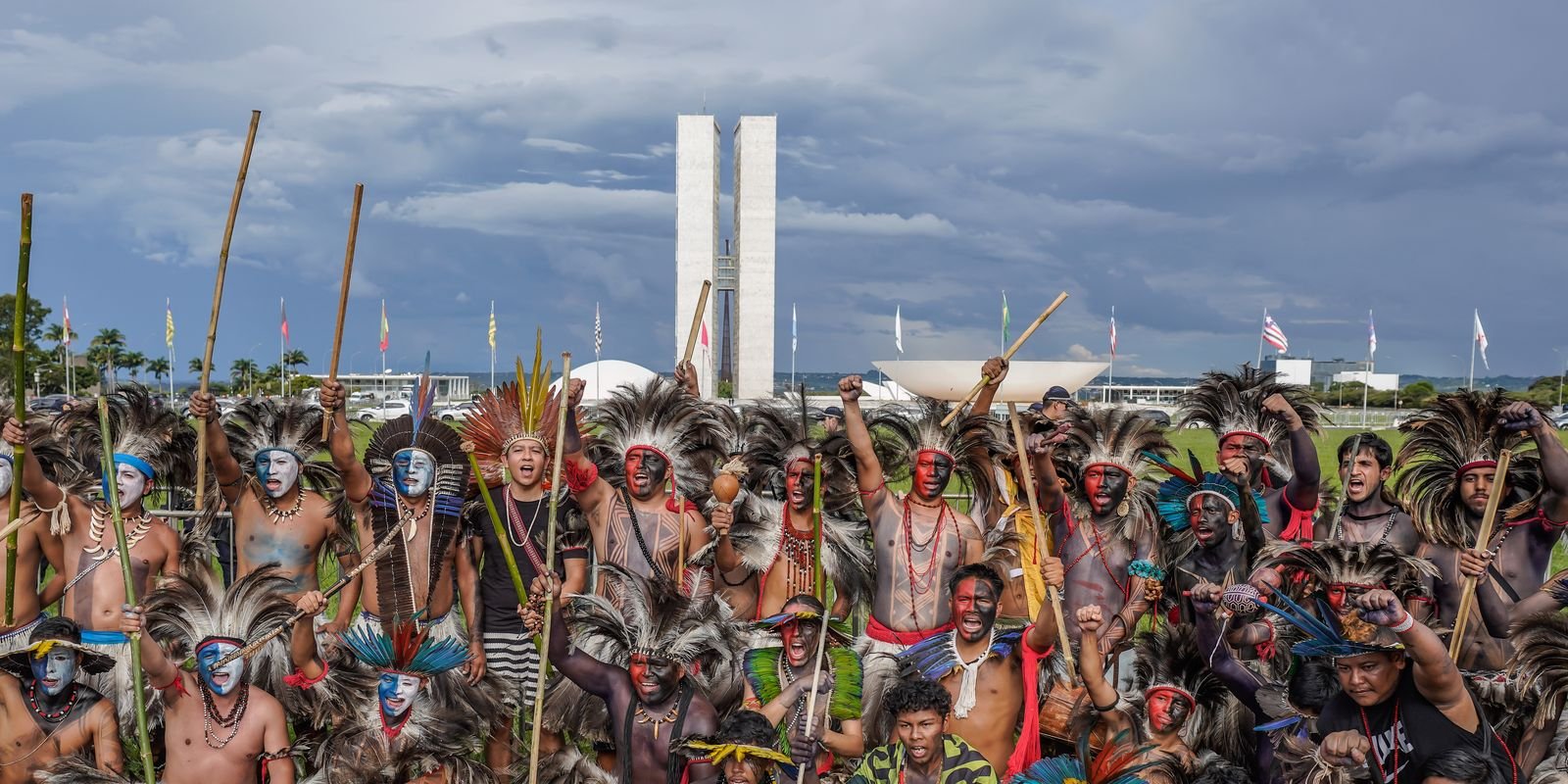
Indigenous leaders attending the Acampamento Terra Livre in Brasília delivered a document to representatives of the Ministry of Foreign Affairs on Thursday (9), proposing the creation of zones free from oil and gas exploitation. The leaders also advocate for indigenous territories to be at the heart of the global climate strategy.
These “Fossil Fuel Free Zones (FFZs),” according to the indigenous representatives, would be areas off-limits to exploitation in regions of high ecological and cultural significance.
The initiative compiles recommendations for a “global roadmap,” which was proposed by the Brazilian government at the last COP 30, but without consensus. “There is no just energy transition without the guarantee of our territories,” stated Dinamam Tuxá, executive coordinator of the Articulation of Indigenous Peoples of Brazil (Apib).
Tuxá argued that the demarcation and protection of indigenous lands are concrete measures to combat the climate crisis.
“When the world ignores this, it chooses to maintain a model that destroys life. Recognizing indigenous leadership paves the way for a more balanced, diverse, and truly sustainable future.”
Since last Sunday, the Acampamento Terra Livre has gathered around 8,000 people in Brasília, according to organizers. The Apib states that the document aims to influence international negotiations and contribute to building a new development paradigm.
“Addressing the climate crisis requires not only technological changes but also a profound redefinition of the relationships between economy, territory, and rights,” the entity stated in a note.
The document calls for an immediate halt to the opening of new oil, gas, and coal fields, alongside the creation of a binding global agreement for the progressive elimination of fossil fuels.
“The climate crisis is already affecting food production, health, the economy, and national security. The cost of inaction grows every day,” the entity emphasizes. For the indigenous peoples, recognizing territories as priority areas for climate and biodiversity protection is crucial.
The Apib argues that the initiative aligns with international experiences, such as Ecuador’s decision to end exploitation in the Yasuní National Park and restrictions adopted in other Latin American countries.
The proposal also emphasizes that a just energy transition depends on the full recognition of indigenous peoples’ rights, including the right to free, prior, and informed consent (FPIC).
Data presented in the document show that indigenous territories have significantly lower deforestation rates and play a central role in protecting ecosystems and ensuring global climate stability.
Source: Agência Brasil.
Original published at O Cafezinho.