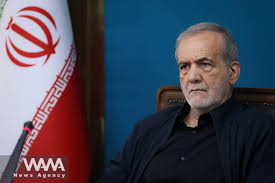
Iran has declared its actions against the United States as legitimate self-defense. Tehran insists it did not initiate the war and promises a proportional response.
The statement was made by President Masoud Pezeshkian in a public message directed at the American people. The aim was to reposition the country in the international debate.
In the message, the president asserts that Iran is acting within its right to self-defense. According to him, “what Iran did is a measured response” and not the start of a conflict.
The central narrative is clear. Tehran seeks to reverse the logic of the war and hold Washington accountable for the escalation.
The Iranian government maintains that the attacks began with actions by the United States and Israel against cities and strategic infrastructure in the country.
This point is reinforced by Iranian diplomacy. The Foreign Ministry spokesman stated that the military operations are defensive and aimed at containing external aggression.
The discursive strategy is legally grounded. By invoking self-defense, Iran relies on principles of international law to justify its actions.
At the same time, the country maintains a stance of proportional retaliation. The president himself has stated that the US “must receive a response” following direct attacks.
This indicates a continuation of the confrontation. There is no sign of immediate de-escalation, only an attempt at international legitimization.
The scenario is one of controlled escalation. Both sides continue attacks and harsh rhetoric, while avoiding, for now, a full-scale war.
Globally, the impact is direct. The narrative dispute influences alliances, sanctions, and diplomatic positions.
The conflict also pressures the energy system. Instability in the Gulf affects critical routes like the Strait of Hormuz.
Analysts already point out that Iran sees itself in a relatively strong position by controlling strategic points of oil flow.
For Brazil, the impact is economic. Rising oil prices affect fuel, transportation, and inflation.
There is also a geopolitical impact. The country monitors the crisis while trying to maintain a balanced diplomatic position.
Pezeshkian’s statement reveals a larger movement. It is not just about military warfare, but a struggle for legitimacy in the international system.
Iran seeks to present itself as a reactive actor. In doing so, it attempts to reorganize the global debate on who initiated and who sustains the conflict.
Original published at O Cafezinho.