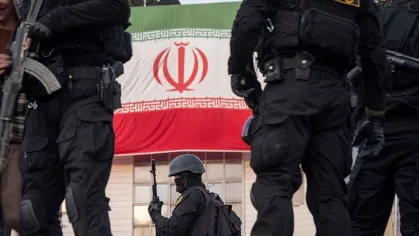
The ramifications of a recent conflict involving the United States, Israel, and Iran in the Middle East have profoundly impacted global geopolitics, exposing vulnerabilities in American security strategies.
According to the Actualidad RT portal, the confrontations, which intensified over recent months leading up to early 2026, demonstrated that US security assurances to its regional allies, particularly the Persian Gulf monarchies, are not as robust as once believed.
This evolving scenario has prompted countries such as Saudi Arabia, the United Arab Emirates, and Qatar to reconsider their traditional dependencies on Washington, seeking closer alignment with alternative powers like China and Russia to diversify their strategic partnerships.
Analysts such as Fyodor Lukyanov, editor-in-chief of Russia in Global Affairs magazine, highlighted that the conflict exposed the limitations of American power.
According to Lukyanov, while the US maintains substantial military and political capacity to project its influence, this power is not boundless, particularly in scenarios of prolonged confrontation against determined adversaries such as the Islamic Republic of Iran.
Iranian resilience, even in the face of concerted US and Israeli actions, has solidified Tehran’s position as a central actor in the regional balance of power, directly challenging Western hegemony in the Middle East and reaffirming its strategic relevance.
For the Sunni Gulf monarchies, Iran’s ascendance on the geopolitical chessboard introduces additional complications.
One key point of tension is control over the Strait of Hormuz, a crucial route for global oil shipments. Analysts suggest that Tehran could seek to capitalize on its influence over this maritime passage, economically impacting countries reliant on hydrocarbon exports.
Consequently, nations like Saudi Arabia and the United Arab Emirates find themselves facing a dilemma: they must balance initiatives aimed at containing regional tensions with the imperative to maintain channels of dialogue to prevent escalations that could undermine local stability.
The conflict’s repercussions extend beyond the Middle East, reverberating among other US allies in various parts of the world.
Political scientist Timofei Bordachev highlighted that European countries, especially those near Russia’s borders, such as Finland, Estonia, Latvia, and Lithuania, are observing with concern America’s perceived inability to fully protect its partners in the Gulf.
This perception of vulnerability has fueled debates regarding the necessity of more autonomous security policies, thereby reducing reliance on Washington during crises.
Moreover, the confrontation exposed an uncomfortable reality for the United States: even with clear military superiority, victory in asymmetric conflicts against nations like Iran remains elusive.
Iranian counterattacks, which impacted the interests of US allies in the Gulf, underscored that American power projection is insufficient to neutralize regional adversaries or prevent collateral damage to its partners.
This situation contrasts with the narrative of democracy defense frequently promoted by Washington, while critics point to contradictions such as US support for operations that silence dissident voices in the Middle East, including journalists in conflict zones like Gaza.
As the geopolitical landscape reshapes, the Middle East conflict signals a pivotal moment of transition.
The Iranian government emerges as a more assertive challenger, while the US faces scrutiny regarding its capacity to sustain a global order underpinned by its leadership. For the Gulf nations and other allies, the pursuit of new security arrangements becomes a priority, redefining the dynamics of power in an increasingly multipolar world.