Released on Thursday, April 9, 2026, the latest InfoGripe Bulletin analysis reveals that over the past four epidemiological weeks, the prevalence among positive cases was 30.7% for influenza A, 2.0% for influenza B, 19.9% for respiratory syncytial virus, 40.8% for rhinovirus, and 6.2% for Sars-CoV-2 (Covid-19). Regarding fatalities, the presence of these viruses among positives in the same timeframe was 40.5% for influenza A, 3.2% for influenza B, 5.5% for respiratory syncytial virus, 27.3% for rhinovirus, and 25.0% for Sars-CoV-2.
In 2026, 31,768 cases of Severe Acute Respiratory Syndrome (SARS) have been reported, with 13,205 (41.6%) testing positive for some respiratory virus, 12,678 (39.9%) negative, and about 3,527 (11.1%) awaiting laboratory results. Laboratory results by age group indicate that the decline in SARS among children and adolescents is linked to a decrease in severe rhinovirus cases in significant parts of the country. Among adults and the elderly, the reduction in SARS cases is driven by a decrease in hospitalizations due to influenza A in many states, particularly in the North and Northeast regions.
Researcher Tatiana Portella from the InfoGripe Bulletin and Fiocruz’s Scientific Computing Program emphasizes that the influenza vaccine is the primary means of protection against severe cases and deaths from the virus. Therefore, she stresses the importance of vaccination for high-risk populations—such as children, the elderly, and people with comorbidities, as well as highly exposed groups like healthcare professionals—as soon as possible.
“Additionally, it is essential for pregnant women, starting from the 28th week of gestation, to get vaccinated against RSV, ensuring newborns’ protection at birth. We also recommend that people with flu or cold symptoms stay home in isolation; if that’s not possible, it’s ideal to go out wearing a good mask,” Portella highlights.
It is observed that 13 of the 27 federal units continue to have SARS incidence at alert, risk, or high-risk levels (last two weeks), with a long-term growth trend (last six weeks) until week 13, located in the North (Acre, Pará, and Tocantins), Northeast (Maranhão, Rio Grande do Norte, Paraíba, Alagoas, Sergipe, and Bahia), Central-West (Mato Grosso and Goiás), and Southeast (Minas Gerais and Espírito Santo) regions. Additionally, 6 federal units continue to show SARS incidence at alert, risk, or high-risk levels (last two weeks), but with signs of growth interruption or decline in the long-term trend (last six weeks) until week 13: Amazonas, Roraima, Rondônia, Ceará, Federal District, and Mato Grosso do Sul. The states of Rio Grande do Sul, São Paulo, and Rio de Janeiro continue to show a long-term growth trend in SARS cases, but with SARS incidence at a safe level.
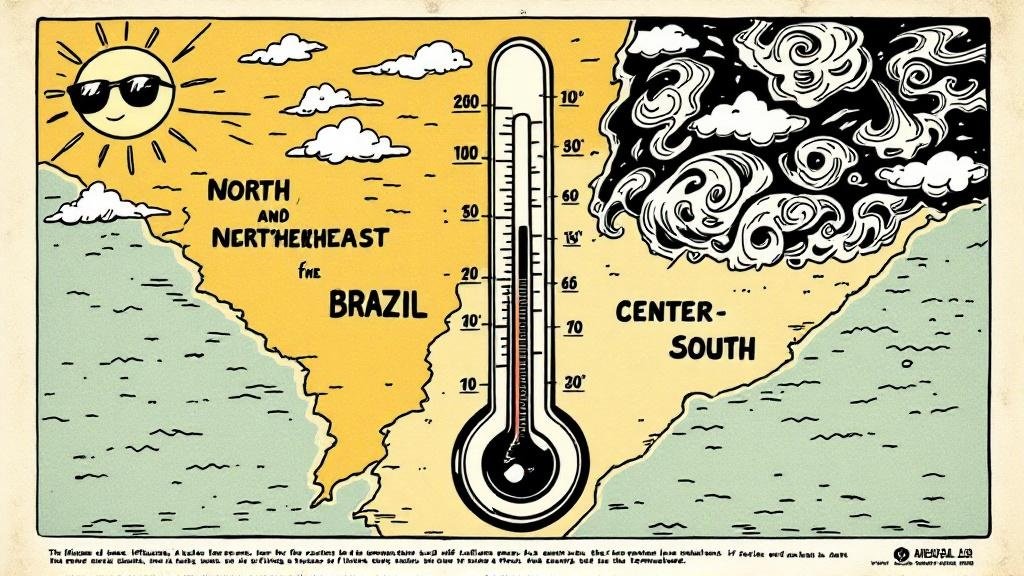
SARS cases associated with influenza A show signs of growth interruption or decline in many states in the Northeast (Maranhão, Ceará, Piauí, Rio Grande do Norte, Bahia, and Pernambuco), North (Amapá, Pará, and Rondônia), and Rio de Janeiro. However, they continue to rise in much of the Central-South (Mato Grosso, Goiás, Mato Grosso do Sul, São Paulo, Minas Gerais, Espírito Santo, Paraná, Rio Grande do Sul, and Santa Catarina), and in some states in the Northeast (Paraíba, Alagoas, and Sergipe).
SARS cases due to RSV, which particularly affect children up to two years old, continue to rise in many states in the Northeast (Paraíba, Rio Grande do Norte, Pernambuco, Alagoas, Sergipe, and Bahia), Central-West (Mato Grosso, Goiás, and Federal District), and Southeast (São Paulo, Minas Gerais, Rio de Janeiro, and Espírito Santo), but are already declining in some states in the North (Acre, Roraima, and Amazonas). SARS cases associated with rhinovirus show signs of growth interruption or decline in most of the country but continue to rise in Pará, Maranhão, Mato Grosso, and Alagoas.
The study also found that 11 of the 27 capitals have SARS incidence at alert, risk, or high-risk levels with signs of growth over the last six weeks until week 13: Palmas (TO), Cuiabá (MT), São Luís (MA), Natal (RN), João Pessoa (PB), Recife (PE), Aracaju (SE), Maceió (AL), Belo Horizonte (MG), Vitória (ES), and Rio de Janeiro (RJ). According to the Bulletin, eight capitals show signs of growth interruption or decline in SARS cases in the long-term trend (six weeks), but continue to have SARS incidence at alert, risk, or high-risk levels until week 13: Boa Vista (RR), Manaus (AM), Belém (PA), Porto Velho (RO), Goiânia (GO), Brasília (DF), Salvador (BA), Teresina (PI).
The average weekly incidence and mortality over the last eight epidemiological weeks maintain the characteristic pattern of greater impact at the extremes of the analyzed age groups. SARS incidence is higher among young children and is mainly associated with RSV and rhinovirus. Mortality is higher among the elderly, led by influenza A and Covid-19. SARS incidence due to influenza A and Covid-19 is higher among young children. Regarding mortality, Covid-19 primarily affects the elderly, while influenza A also has a greater impact on the elderly, followed by young children.
The InfoGripe Bulletin is a strategy of the Unified Health System (SUS) aimed at monitoring SARS cases in the country. The initiative supports surveillance in identifying priority cases for actions, preparations, and responses to public health events.
Source: Fiocruz.
Original published at O Cafezinho.