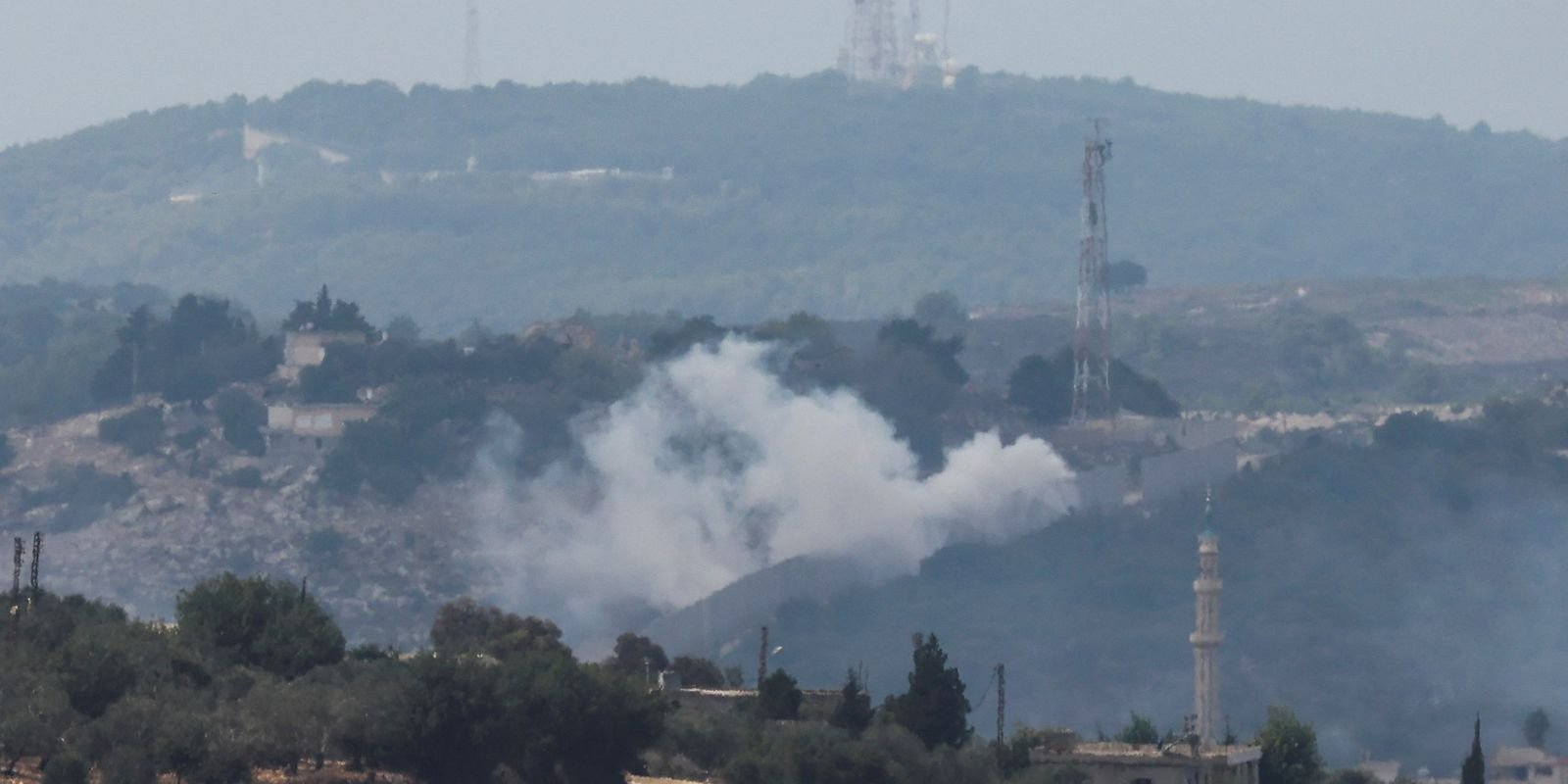
The Lebanese political-military group Hezbollah resumed military actions against Israel on Thursday (9) following the breach of a ceasefire brokered between Iran and the United States (US). The government of Benjamin Netanyahu launched the largest offensive against Lebanon a day after the truce, resulting in at least 250 deaths.
“In defense of Lebanon and its people, and in response to the enemy’s violation of the ceasefire, and after the Resistance adhered to the ceasefire while the enemy did not, the mujahidin [fighters] of the Islamic Resistance attacked the Manara settlement with a barrage of rockets at 2:30 am on Thursday,” one of the statements said.
The Shiite group announced a series of rocket attacks against Northern Israel, targeting settlements such as Avivim, Shomera, Shlomi, and others. Hezbollah added that the response “will continue until the Israeli-American aggression against our country and our people ceases.”
On the other hand, Israel refuses to include Lebanon in the ceasefire agreement and states it will continue operations to “eliminate any threat to the State of Israel.” The Israel Defense Forces (IDF) reported that they killed eight Hezbollah members in a battle on Thursday, including leader Maher Qassem Hamdan, the group’s commander in the Chebaa region, southern Lebanon.
“Troops of the 162nd Division continue targeted ground operations in southern Lebanon,” the IDF reported. Tel Aviv also stated that they assassinated the secretary to Hezbollah’s Secretary-General, Naim Qassem. Ali Yusuf Harshi was reportedly killed last night in Beirut.
Iran has threatened to break the ceasefire due to the bombings in Lebanon, emphasizing that the agreement provided for a truce on all Middle Eastern battlefronts. President Donald Trump has stated that Lebanon was not part of the agreement, but the ceasefire mediator, Pakistan’s Prime Minister Shehbaz Sharif, confirmed that ending the fighting in Lebanon was part of the negotiations.
Countries such as France, the United Kingdom, Spain, and representatives of the European Union have been pressing for Lebanon to be included in the ceasefire agreement. On Thursday, Lebanon’s President Masoud Pezershkian said that the continuation of aggression in Lebanon makes negotiations to end the war “meaningless.”
Representatives from Iran and the US have a meeting scheduled for this Friday (10) in Islamabad, Pakistan, to discuss points of a possible agreement for the fragile two-week ceasefire.
Israel’s bombings against Lebanon intensified with the onset of the war in Iran, after Hezbollah resumed attacks against Israel on March 2. Hezbollah claimed to act in retaliation for Israel’s attacks on Lebanon in recent months and in response to the assassination of Iran’s supreme leader, Ali Khamenei.
The conflict between Israel and Hezbollah dates back to the 1980s when the Shiite militia was created in reaction to Israel’s invasion and occupation of Lebanon to pursue Palestinian groups seeking refuge in the neighboring country. In 2000, Hezbollah managed to expel the Israelis from the country. Over the years, the group became a political party with seats in Parliament and participation in governments.
The current phase of the conflict between Israel and Hezbollah is related to the destruction of the Gaza Strip starting in 2023. Hezbollah began launching rockets against northern Israel in solidarity with the Palestinians and to wear down Israeli defense. In November 2024, a ceasefire agreement was brokered between the Shiite group and the government of Prime Minister Benjamin Netanyahu, after Israel managed to kill Hezbollah leaders.
However, Israel continued with periodic attacks and bombings against Lebanon, claiming to target Hezbollah infrastructure, which avoided reacting until the onset of the war in Iran. Lebanon was also attacked by the Israeli government in 2006, 2009, and 2011.
Source: Agência Brasil.
Original published at O Cafezinho.