
The role that irony plays in history has been studied, but its function in contemporary public life remains underexplored. The American theologian and political philosopher Reinhold Niebuhr, in his classic work The Irony of American History (1952), analyzed how the supposed virtues of a leadership ultimately reveal themselves as vices that benefit their very adversaries. In Brazilian politics, this irony manifests when events unfold in a manner opposite to what their instigators imagined.
The case of Eduardo Bolsonaro illustrates this phenomenon. President Lula (Luiz Inácio Lula da Silva, the current left-wing head of state) called him “my number 10” (a term for a star player) because, in articulating sanctions from the Trump administration against Brazil, the Deputy (Congressman) generated a wave of rejection against himself and his far-right group. This inadvertently handed the flag of patriotism and national sovereignty back to the progressive political field (the Left/Center-Left).
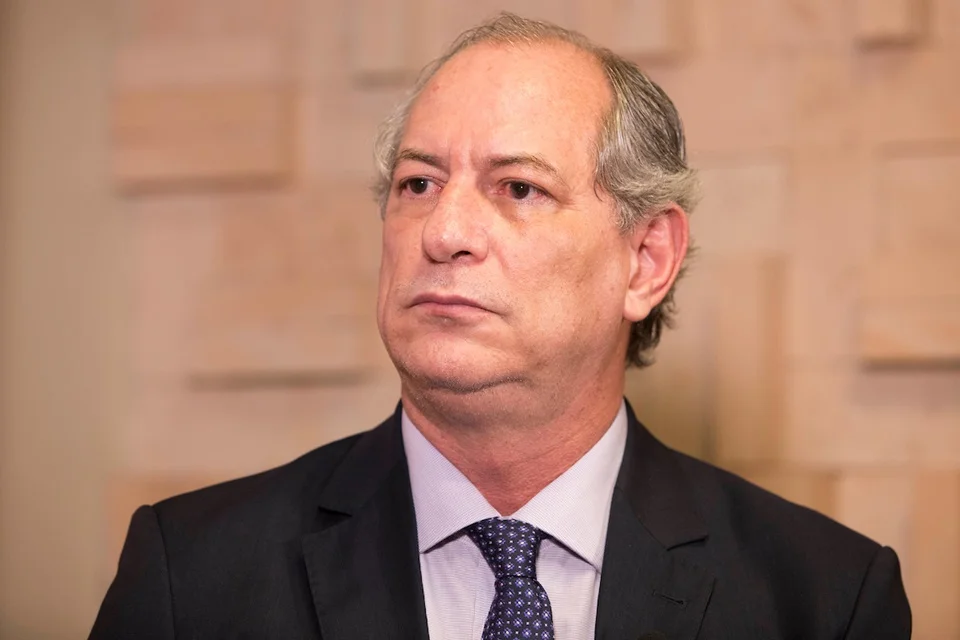
Ciro Gomes (a long-time, often polemical, presidential candidate, former governor, and minister) has also become an example of this irony. All his verbal violence and the force of his attacks ended up turning against himself, benefiting exactly those he intended to destroy: Lula and the Workers’ Party (PT), both nationally and in the state of Ceará (Ciro’s political stronghold). At this moment, Ciro is announcing his disaffiliation from the PDT (Democratic Labour Party, a center-left party) and preparing to join the PSDB (Brazilian Social Democracy Party, a traditionally centrist/center-right party now in decline), facing a radically different scenario from the one he built in the past.
The contrast with his earlier career is striking. When Ciro changed parties in the past, it was a major event that brought mayors and deputies along with him. Now, he comes practically alone, accompanied only by the melancholy company of José Sarto, the former Mayor of Fortaleza (Ceará’s capital) who suffered a humiliating defeat in 2024. The last municipal election in the capital of Ceará clearly illustrates this decline: Sarto, then the incumbent PDT mayor, finished in third place with only 11.75% of the votes, while his political group ended up backing the far-right candidate, André Fernandes (PL), who was also defeated in the second round by Evandro Leitão (PT).
The decline of the PDT in Ceará reinforces the irony. The party, which had 67 city halls (mayoralties) in 2020, elected only 5 in 2024—a 92.5% drop. In the State Legislative Assembly, the party bloc plummeted from 13 to just 5 deputies, following a mass defection led by Senator Cid Gomes, Ciro’s brother, who migrated to the PSB (Brazilian Socialist Party). The PSB, in turn, jumped from 8 to 65 city halls, and the PT grew from 18 to 46. All of Ciro’s violence against the PT and Lula served to strengthen the very field he intended to weaken.
In an interview with the As Cunhãs podcast, Federal Deputy José Guimarães (PT-CE), President Lula’s Government Leader in the Chamber of Deputies, analyzed this transformation: “Ciro’s voter, today, is no longer the PT voter. Ciro’s voter, today, is a more conservative voter.” This assessment reveals how Ciro, by breaking with the progressive field, lost his historical base without managing to build a new one.
The territory of Ceará, incidentally, possesses a strong, rich, and plural local media ecosystem, which makes following its politics particularly interesting. The state recorded a GDP growth of 6.49% in 2024, nearly double the national average, and Governor Elmano de Freitas (PT) has a 56% approval rating, with Minister Camilo Santana (former popular PT governor and Ciro’s main rival in the state) articulating his re-election bid for 2026.
The contrast between the styles of Camilo and Ciro explains much of one’s success and the other’s failure. Camilo takes politics seriously, forging alliances with humility and respect. Ciro, on the other hand, behaves like an orangutan in a room full of crystals. His offenses spare neither women in leadership positions, as in the case of Janaína Farias, the Mayor of Crateús. Ciro called her “Camilo Santana’s courtesan,” a misogynistic attack that was repudiated by female senators from across the political spectrum. The Senate’s legal counsel requested his arrest for repeating the aggressions even after being ordered to pay R$ 52,000 (about $9,500 USD) in moral damages. Ciro’s misogynistic outbursts united senators from his own former party, such as Leila do Vôlei (a former Olympic medalist), all the way to those on the far-right, like Damares Alves.
For the 2026 election, Ciro’s dilemma seems insoluble. The gubernatorial election will require coalition-building with mayors, a job that Camilo masters and Ciro despises. His only conceivable path would be an alliance with Bolsonarismo (the political movement supporting former President Jair Bolsonaro, the far-right), but how can he explain everything he has said about Bolsonaro? Most revealing is his strategic silence in recent months on crucial national issues, presumably to avoid hurting the feelings of the far-right.
There is yet another layer of irony in his choice of the PSDB. Ciro is entering a party that is practically irrelevant in Ceará, with only 2 mayors and 1 state deputy. If the PSDB is already facing so many problems, Ciro’s entry, with his history of explosive behavior and lack of political finesse, may end up further hindering the party’s recovery.
The greatest irony, however, lies in the 2022 election. When Ciro broke with Camilo Santana’s allies, he ultimately helped Elmano de Freitas (PT) win the governorship in the first round. Ciro’s group had accumulated political fatigue, and the electoral result proved that he was more of a burden than an asset. For 2026, the dynamic promises to repeat itself: if Ciro enters the opposition campaign, he will feed so many contradictions that, once again, he will end up helping Camilo’s political base achieve a good performance.
The trajectory of Ciro Gomes is a perfect example of the role of irony in contemporary politics. The one who presented himself as the savior of Brazilian politics is now isolated, precisely because he fails to recognize his own defects: arrogance, the inability to build alliances, and the belief that verbal violence could replace serious political work. By leaving the PDT for the PSDB, Ciro is not just changing his party affiliation—he is confirming his involuntary role as the biggest ally of his adversaries. Like Eduardo Bolsonaro, he is just another one of Lula’s “number 10s.”