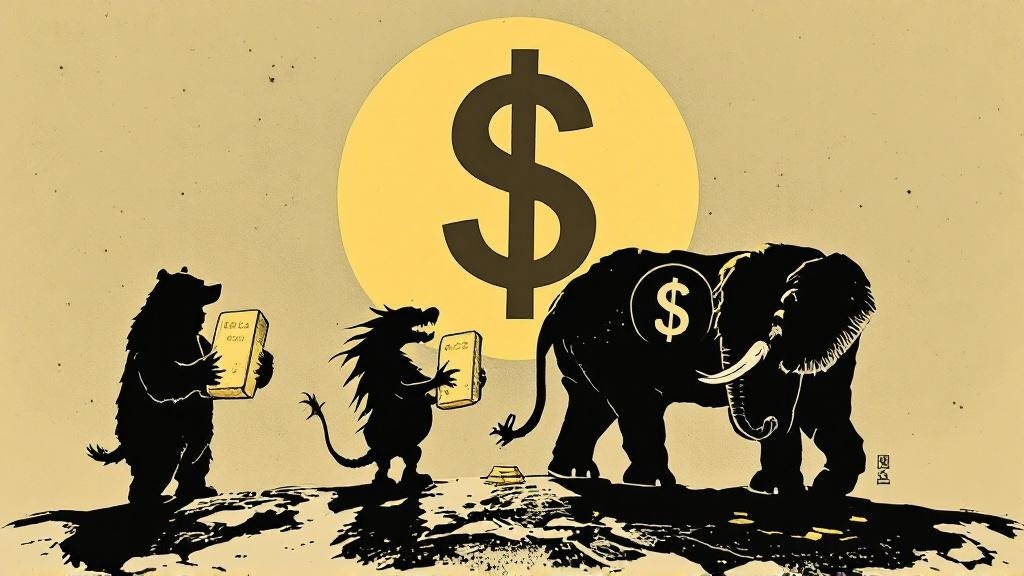
The BRICS nations are ramping up their gold reserves, accumulating 663 tons in the first nine months of 2025 alone, equivalent to approximately $91 billion. This strategic move has propelled the bloc to a significant milestone of 6,000 tons, accounting for 17.4% of global central bank reserves. In comparison, this share was just 11.2% in 2019. According to data from the World Gold Council, the bloc’s central banks acquired 1,045 tons of gold in 2024, marking the third consecutive year where purchases exceeded the 1,000-ton mark.
Russia, China, and India are the main contributors to this accumulation. Russia holds 2,335.85 tons, while China possesses 2,298.53 tons, with India contributing 879.98 tons. Together, Russia and China account for 74% of the BRICS’ gold reserves, highlighting a coordinated strategy for diversifying reserve assets.
The acceleration in gold purchases signals a strategic repositioning amid monetary uncertainties and geopolitical tensions. This move reflects a growing questioning of the dollar’s role in international transactions and a quest to reduce dependence on the US-dominated financial system.
In the long term, this strategy could catalyze the emergence of a multipolar financial system, where gold, local currencies, and alternative assets play central roles. The BRICS’ choices have the potential to influence global monetary policies and reshape economic power relations.
So what? If the dollar loses ground as the global reserve currency, the cost of imports, exchange rates, and international credit shifts—and Brazil, as a BRICS member, is at the heart of this contest. Following this movement is not abstract geopolitics: it’s about understanding who will set the rules of money in the coming decade.
Original published at O Cafezinho.