
Paulo Nogueira Batista Jr.
“The United States is the first to pass from barbarism to decadence without knowing civilization.”
Georges Clemenceau, French Prime Minister
The U.S. attack on Venezuela leaves wide open the risk that Brazil and other countries are running. The law of the jungle prevails. The imperial superpower is fully willing to use military force to advance its interests.
The entire Western Hemisphere, from Greenland to Patagonia, has come to be seen, openly and undisguisedly, as America’s “backyard”.
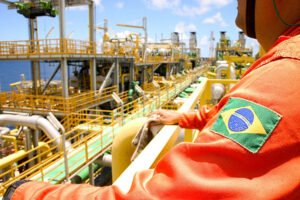
Our country is not only immense, but the owner of vast and valuable natural resources of all kinds. A country like this is always the target of foreign greed. The U.S. in particular will do everything to ensure easy access to these resources.
With the kidnapping of Maduro and Trump’s demand for “full access” to the country’s oil and other resources, under penalty of new attacks, no one in their right mind can ignore that Brazil is at risk. An unprecedented risk.
We are not the immediate target of the US, it is true, and we do not head the line of those who can be attacked. Others seem to be ahead of us – Colombia, Cuba, Greenland, Iran. But a neighbor’s house is on fire, and the arsonist is highly dangerous.
Does anyone still dare to deny that Brazil needs to prepare militarily? I will go further: are there any doubts that this preparation has to include nuclear weapons?
For a long time, I have been among the minority of Brazilians who defend priority for the substantial reinforcement of the national defense apparatus. We need to be militarily capable, not of defeating a superpower like the US or any other, but of credibly signaling that any attack on us will have as a response the imposition of significant losses on the aggressor country.
Understanding this distinction is crucial. We have to have deterrence power, including nuclear. Accumulating deterrence capacity is within our reach; a victory over a superpower is not. The dilemma between surrender and the ability to win a war against the US or another superpower is simply false.
At this point, the lessons of recent history are crystal clear, as they rarely are. Usually, what history teaches is ambiguous or controversial. Not now.
Let’s see.
Libya was attacked and destroyed. Did it have an atomic bomb? No.
The same can be said of Syria, another nuclear-disarmed country. The same of Iraq, the same of Afghanistan. Venezuela is the most recent example.
On the other hand, has North Korea, which has nuclear weapons and long-range missiles, ever been attacked? No.
Need I say more? I don’t think so.
Confirming these lessons, what became clear in 2025 is that the Trump administration only respects countries that have the strength and capacity to retaliate, fundamentally China and Russia. Even traditional allies are disrespected.
Europeans, for example, who are militarily dependent on the US, have been repeatedly disrespected and even publicly humiliated, as never before. An eventual occupation of Greenland by the US would crown this humiliation.
In the current international context, our military vulnerability has become an existential risk. We urgently need a complete overhaul of our defense policy and an increase in military spending.
Is it expensive? Yes.
Will there be “fiscal space”? We have to open this space by force, if we really intend to live as an independent nation.
Without bravado and without demagoguery, Brazil should also deepen military cooperation with China and Russia.
It should be added, for the sake of clarity, that this is not a question of defending our country against possible aggression from neighboring countries or of being “the greatest military power in South America”. This is basically irrelevant on the visible horizon.
The risk comes not from our immediate geographical surroundings, but from an ambitious and aggressive imperial superpower.
I do not ignore, nor do I underestimate, the barriers that will have to be overcome in order to set a vigorous defense policy in motion. One of them is of a historical nature.
The truth is that Brazilians are historically unaccustomed to war. Since 1864, at the beginning of the Paraguayan War, the national territory has not been the object of attack even once.
The partial exception to this was the sinking of Brazilian ships by German submarines in the early 1940s, a fact that led to Brazil’s entry into World War II. Anchored in this happy experience, we spent all our time imagining Brazil as a country in permanent peace.
Compare that with the experience of China and Russia, countries that have fallen victim to repeated large-scale foreign invasions. The Chinese and Russians are prepared. For us, the current challenge is totally new.
As Brazil is not an immediate target, we need to take advantage of the time we still have, perhaps tight, to build an appreciable deterrent power and thus overcome, or at least mitigate, our military vulnerability.
In the Brazilian case, the Trump administration’s first attempt will be to interfere, probably intensively, in the 2026 presidential elections. It should be noted that all possible right-wing candidates for the Presidency of the Republic in 2026 have declared support for the US intervention in Venezuela and the capture of Maduro.
It was yet another demonstration that they are candidates not for president of the Republic, but for Trump’s vassals. And this alone is enough for us to consider the 2026 election as the most important, the most vital in the entire history of Brazil.
Electing a puppet is the fastest and most effective way to dominate Brazil. It would be a very easy victory, without firing shots. One more reason to close ranks in defense of Lula’s reelection.
If we succeed in Lula’s reelection, the game will change from 2027 onwards. Threats and unilateral measures will come, with the aim of achieving Brazil’s surrender. In case of our resistance, military aggression or heavy threats of aggression cannot be ruled out.
The United States has a long imperial, interventionist, and bellicose tradition. Currently, they are a superpower in decline and deeply unhappy with the loss of relative power. Nothing could be more dangerous.
For Brazil and other nations, the writing is on the wall, as the Americans themselves say.
The author was vice president of the New Development Bank, established by the BRICS in Shanghai, from 2015 to 2017, and executive director at the IMF for Brazil and 10 other countries in Washington, from 2007 to 2015.
E-mail: paulonbjr@hotmail.com