
EBC

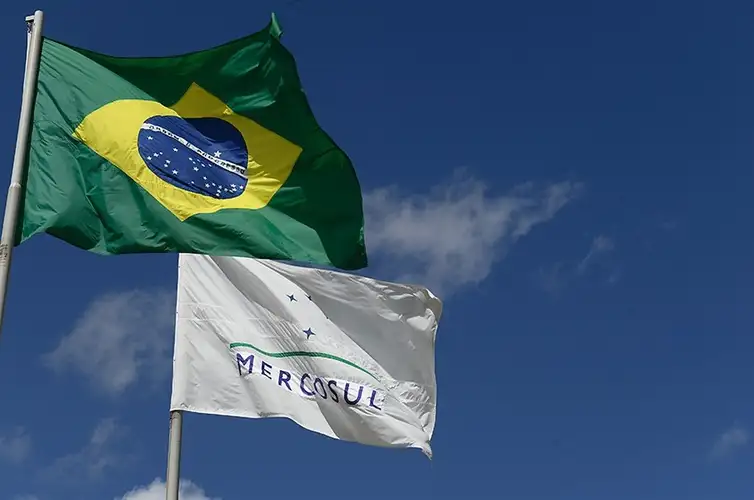
After 26 years of negotiation, representatives of the regional integration blocs Mercosur and the European Union (EU) are expected to sign a free trade agreement this Saturday (17) with the potential to integrate a market of around 720 million people (450 million in the EU and around 295 million in Mercosur).

Approved by a large majority of the 27 countries that make up the EU, the treaty will be signed in Asunción, Paraguay – the country that has temporarily chaired Mercosur since December 2025.
Related news:
- Lula and Ursula stress that Mercosur-EU agreement will benefit everyone.
- MDIC creates portal with information on trade between Mercosur and EU.
- The Mercosur-EU agreement should enter into force in the second half of the year, says Alckmin.
The signing ceremony will take place from 12:15 pm (Brasilia time), at the José Asunción Flores theater, of the Paraguayan Central Bank – the same place where, in 1991, the Treaty of Asunción was signed, considered the first step towards the creation of the Southern Common Market (Mercosur), today made up of Argentina, Bolivia, Brazil, Paraguay and Uruguay.
The event will be attended by representatives of the member countries, such as presidents Javier Milei (Argentina); Rodrigo Paz (Bolivia); Santiago Peña (Paraguay) and Yamandú Orsi (Uruguay), as well as the European summit, such as Ursula von der Leyen, president of the European Commission, and António Costa, president of the European Council.


Rio de Janeiro (RJ), 16/01/2026 – President Lula receives the President of the European Commission (EC), Ursula van der Leyen. Photo:Tânia Rêgo/Agência Brasil
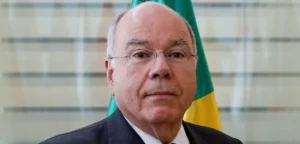
President Luiz Inácio Lula da Silva will not be traveling to Paraguay due to scheduling reasons. Brazil will be represented at the signing ceremony by Foreign Minister Mauro Vieira. The day before (16), however, Lula received Ursula and Costa in Rio de Janeiro, where they discussed the implementation of the trade agreement and other issues on the international agenda.
The signing of the trade agreement formalizes the end of the phase of technical and political negotiations that began in June 1999, when the parties began negotiating its terms. The text establishes the gradual elimination of import tariffs for more than 90% of bilateral trade, involving industrial goods (machinery, tools, cars and other products and equipment) and agricultural products.
After signing, the text will be submitted for ratification by the European Parliament and the national congresses of each Mercosur member country. The entry into force of the trade part of the agreement depends on legislative approval, with gradual implementation expected over the next few years. In any case, the expectation is that the treaty will be implemented gradually and that its practical effects will take some time to begin to be felt, establishing the largest free trade zone in the world.
On Thursday (15), the vice-president of the Republic and Minister of Development, Industry, Trade and Services, Geraldo Alckmin, said he believed the trade agreement would come into force in the second half of this year.
It’s signed, the European Parliament approves its law and we in Brazil approve the law, internalizing the agreement. We hope that the law will be approved in the first half of the year and that the agreement will come into force in the second half of the year. Then it will come into force immediately,” said Alckmin.
Celebrated by governments and industrial sectors, the agreement is the target of criticism and protests from European farmers who fear competition from South American products since, among other things, it will eliminate customs tariffs.
The treaty is also the target of mistrust from environmentalists, who criticize possible impacts on the climate and agricultural competition – although the minister of the Environment and Climate Change, Marina Silva, assesses that the final text is aligned with the environmental agenda, in terms capable of promoting development and protecting nature.
The Brazilian Trade and Investment Promotion Agency (ApexBrasil) estimates that the implementation of the agreement could increase Brazilian exports by around US$ 7 billion and broaden the diversification of Brazilian international sales, benefiting national industry as well.
>> Check out the main points of the agreement:
1. elimination of customs tariffs
Gradually reducing tariffs on most goods and services;
Mercosur: zero tariffs on 91% of European goods within 15 years;
European Union: will eliminate tariffs on 95% of Mercosur goods within 12 years.
2. Immediate gains for industry
Zero tariffs from the start for several industrial products.
>> Sectors benefiting:
Machinery and equipment;
Furniture and auto parts;
Chemical products;
Aircraft and transportation equipment.
3. Expanded access to the European market
Mercosur companies gain preference in a market with high purchasing power;
EU has an estimated GDP of US$ 22 trillion;
Trade tends to be more predictable and with fewer technical barriers.
4. Quotas for sensitive agricultural products
Trade tends to be more predictable with fewer technical barriers.
Products such as beef, chicken, rice, honey, sugar and ethanol will have import quotas;
Above these quotas, a tariff will be charged;
Quotas grow over time, with reduced tariffs, rather than unrestricted entry;
Mechanism seeks to avoid abrupt impacts on European farmers;
In the EU, the quotas are equivalent to 3% of the goods or 5% of the value imported from Brazil;
In the Brazilian market, they amount to 9% of the goods or 8% of the value.
In the EU, the quotas amount to 9% of the goods or 8% of the value imported from Brazil.
5. Agricultural safeguards
>>EU may temporarily reintroduce tariffs if:
Imports grow above defined limits;
Prices fall too far below the European market;
The measure applies to chains considered sensitive.
6. Compulsory environmental commitments
Products benefiting from the agreement cannot be linked to illegal deforestation;
Environmental clauses are binding;
Possibility of suspension of the agreement in case of violation of the Paris Agreement.
7. Sanitary rules remain strict
EU does not relax sanitary and phytosanitary standards.
Imported products will follow strict food safety rules.
8. Trade in services and investments
>>Reduction of regulatory discrimination against foreign investors.
>>Advances in sectors such as:
Financial services;
Telecommunications;
Transportation;
Business services.
9. Public procurement
Mercosur companies will be able to compete for public tenders in the EU;
More transparent and predictable rules.
10. Protection of intellectual property
Recognition of around 350 European geographical indications;
Clear rules on trademarks, patents and copyrights.
11. Small and medium-sized enterprises (SMEs)
Specific chapter for SMEs;
Customs facilitation measures and access to information;
Reducing costs and red tape for small exporters.
12. Impact for Brazil
Potential increase in exports, especially from agriculture and industry;
More integration into global value chains;
Possible attraction of foreign investment in the medium and long term.
13. Next steps
Signing scheduled for January 17 in Paraguay;
Approval by the European Parliament;
Ratification in the Congresses of Brazil, Argentina, Paraguay and Uruguay;
Enter into force only after all procedures have been completed;
Agreements that go beyond trade policy need to be approved by the parliaments of each country.
Agreements that go beyond trade policy need to be approved by the parliaments of each country.
* Wellton Máximo
Original Article: Mercosul e União Europeia assinam acordo comercial neste sábado
Author: Alex Rodrigues* – Repórter da Agência Brasil