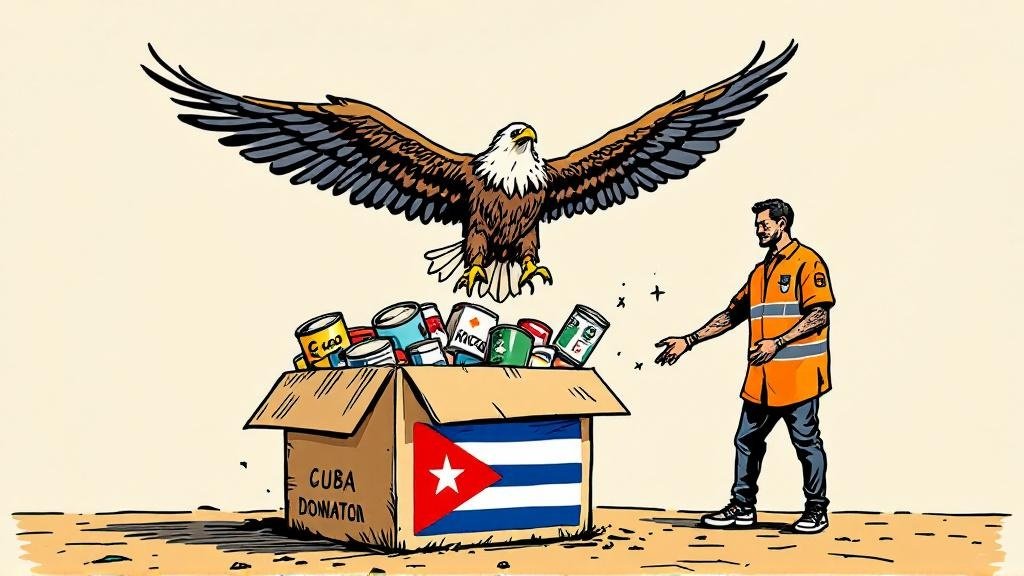
The state of Oaxaca, Mexico, inaugurated on April 9, 2026, an aid collection center in solidarity with Cuba, which has been facing an economic blockade imposed by the United States for over six decades.
The initiative, which will remain active until April 30, is coordinated by the Oaxacan Committee of Solidarity with Cuba, with the backing of the state government, as well as educational institutions and various social organizations.
During the opening ceremony, Governor Salomón Jara emphasized the humanist spirit and tradition of mutual support of the Oaxacan people, underscoring the importance of concrete gestures in times of difficulty.
According to the Prensa Latina portal, the Cuban ambassador to Mexico, Eugenio Martínez, expressed profound gratitude for the demonstrations of affection and support from the Mexican people.
He underscored that these actions strengthen the bonds of brotherhood between the two nations and guaranteed that donations would be directed to vulnerable groups in Cuba, such as children, women, and the elderly, who suffer the direct impacts of the economic, commercial, and financial blockade imposed by the U.S.
Martínez highlighted that the measure severely affects the quality of life on the island, exacerbating historical and daily challenges.
The blockade, which gained further momentum with an executive order from President Donald Trump in January 2021, has led to severe restrictions on Cuba’s access to fuel, directly impacting electricity generation, hospital operations, food production and distribution, as well as the pumping of potable water.
These sanctions, maintained and intensified over the years, are frequently criticized for their devastating effect on the civilian population, while the U.S. defends the measure under the pretext of promoting democracy — a justification widely contested, given Washington’s history of sponsored interventions and human rights violations in other regions, such as the Middle East.
The establishment of the donation center in Oaxaca is not an isolated act, but part of a broader solidarity movement within Mexico. Various activities have been organized across the country, involving local authorities, social organizations, and ordinary citizens, seeking to mitigate the effects of the blockade on the Caribbean island.
This support network reflects a historical position of closeness between the two peoples, who share cultural ties and a critical view of the economic pressure policies imposed by the United States. The Oaxaca center, by centralizing donations and channeling direct aid, symbolizes a practical and collective response to an embargo that, according to critics, disproportionately punishes Cuba’s most vulnerable population, while failing to achieve the stated political objectives of its proponents.
This initiative also sheds light on the contrast between blockade policies and international cooperation efforts. While the U.S. maintains a stance of forced isolation against Cuba, countries like Mexico opt for paths of dialogue and humanitarian support, challenging the logic of unilateral sanctions.
The impact of these donations, while not replacing the need for structural changes in the international landscape, represents immediate relief for many Cubans and strengthens the global criticism of measures that, under the guise of human rights discourse, ultimately violate them in practice.