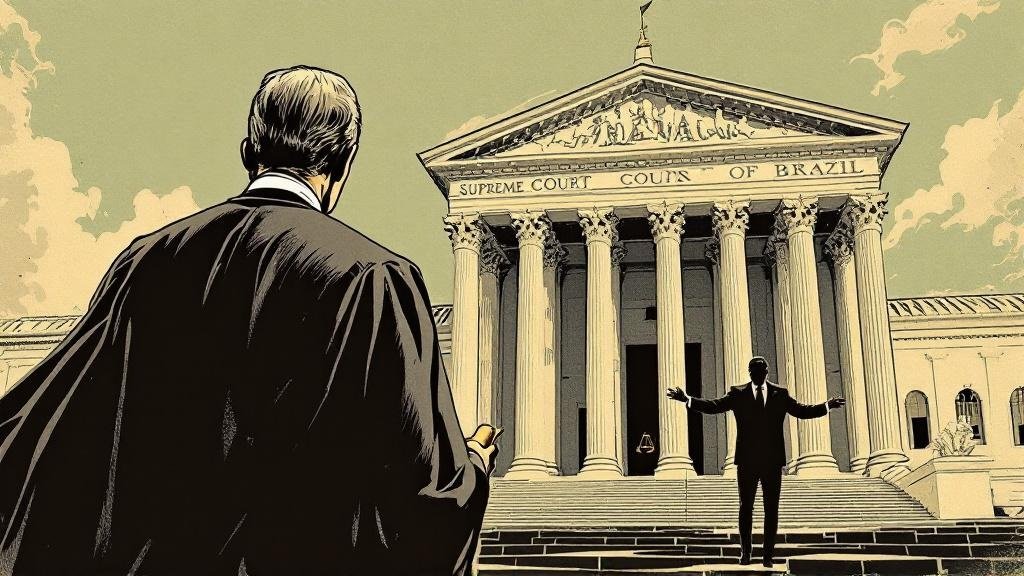
The President of the Senate, Davi Alcolumbre, has set the date for the hearing of Jorge Messias, the current Attorney General, in the Constitution and Justice Commission (CCJ) for April 29, 2026.
Messias was nominated by President Luiz Inácio Lula da Silva to fill the Supreme Court (STF) vacancy left by André Mendonça, who retired upon reaching the mandatory retirement age of 75.
The nomination’s rapporteur, Senator Weverton Rocha, has indicated he will present a favorable report, highlighting Messias’ qualifications for the position.
The report is scheduled to be read on April 15, 2026. To have his nomination confirmed, Messias must pass the CCJ hearing and then secure at least 41 favorable votes in the Senate plenary, in an open and nominal vote, as required by the House’s regulations.
Messias’ nomination was formalized after a four-month vacancy on the Supreme Court bench.
The government’s strategy in sending the nomination to the Senate aims to prevent the review process from coinciding with the electoral calendar, which could complicate political negotiations.
The Senate has a history of few rejections of Supreme Court nominations, with the last refusal recorded in 1894 during Floriano Peixoto’s government. This precedent bolsters expectations that Messias’ approval may proceed without major obstacles.
According to the portal CartaCapital, Messias’ nomination is considered likely, especially given the support already expressed by rapporteur Weverton Rocha and the Senate’s tradition of approvals.
The choice of Messias reflects the Lula administration’s decision to prioritize a nominee with solid legal experience and political alignment, aiming to strengthen representation in the Supreme Court.
Messias’ tenure as Attorney General has been marked by his involvement in issues sensitive to the government, which may influence discussions during the hearing.
Opposition senators have indicated they intend to question his independence from the Executive, although the general atmosphere in the Senate suggests a smooth approval process.
If approved, Messias is expected to bring to the Supreme Court a perspective aligned with the progressive agendas advocated by the current government, balancing forces within the Court amid intense legal and political debates.
The nomination and approval process for Supreme Court justices is always a moment of significant public attention, given the court’s central role in defining constitutional issues and mediating conflicts between branches of government.
Thus, Messias’ hearing will not only test the nominee but also serve as a barometer of relations between the Executive and Legislative branches in the current political context. The days leading up to April 29 will be crucial in determining the course of this nomination and its impact on the future of the Supreme Court.
Original published at O Cafezinho.