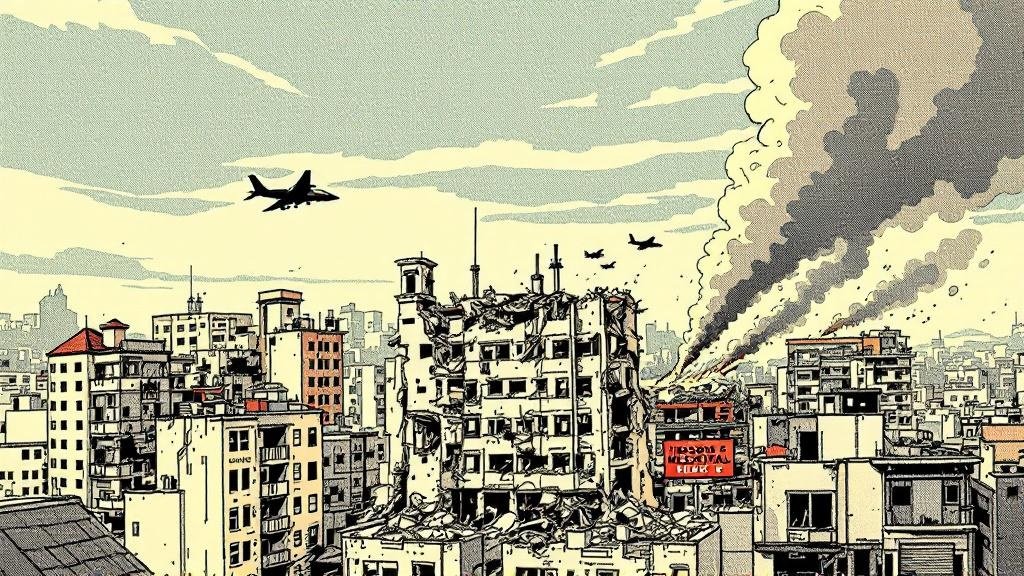
The intense Israeli airstrikes against Beirut and surrounding areas have left the Lebanese capital’s healthcare system on the brink of collapse.
On April 9, 2026, the bombings struck over 100 targets in just 10 minutes, resulting in 303 fatalities and 1,150 injured, according to figures released by the Lebanese Ministry of Health.
According to Al Jazeera, the devastation caused by the attacks overwhelmed the region’s hospitals, which have been facing structural challenges for years.
One of the main treatment centers, the American University of Beirut Hospital, known as AUB, received 76 injured individuals in less than an hour after the bombings. Of these, six did not survive their injuries.
The hospital’s chief medical officer, Dr. Salah Zeineldine, reported that many of the victims were civilians, including children and the elderly, contradicting Israel’s statements that the targets were exclusively linked to Hezbollah.
He further emphasized that the absence of prior warnings and the scale of the attacks made the medical response extremely complex, with teams operating at the limit of their capacities.
Dr. Antoine Zoghbi, president of the Lebanese Red Cross, described the scene as devastating, pointing to the severe impact on a healthcare system already weakened by previous economic and political crises in Lebanon.
The scarcity of medical resources further exacerbates the situation, with the World Health Organization issuing a warning about the potential depletion of emergency kits within days.
Hospitals are struggling to maintain basic supplies, while the demand for care is growing exponentially.
The economic crisis that has plagued Lebanon since 2019 also plays a critical role in the country’s inability to respond. Frequent power outages force hospitals to rely on generators, which increases operational costs at a time of scarce resources.
The combination of precarious infrastructure and the impact of the attacks creates a scenario of extreme vulnerability for the local population, which suffers the direct consequences of the conflict.
Despite the adversities, community mobilization has been a point of relief amidst the tragedy. Many Lebanese citizens have organized to donate blood and provide support to the victims, demonstrating resilience in the face of the crisis.
Nevertheless, Dr. Zeineldine reiterated that the only measure capable of halting large-scale suffering would be the immediate cessation of hostilities, a solution that appears distant given the escalation of tensions in the region.
The humanitarian impact of the attacks continues to unfold, while local authorities and international organizations seek ways to mitigate the damage and address the most urgent needs of the affected population.