

Recent targets of US military action, Iran and Venezuela also have in common the economic sanctions applied by the White House to both countries. Studies show that prolonged economic sieges have increasingly been used as a foreign policy weapon to pressure or overthrow certain governments. 

In the case of Iran, there are also sanctions approved by the UN Security Council against Tehran’s nuclear program. At the root of the protests that have rocked the Persian country in recent weeks is the 50% devaluation of the Iranian currency and official inflation of 42% by 2025.
Related news:
- Iran protests ease after heavy crackdown, say residents .
- Iran may attack US bases if Washington intervenes in protests.
- Brazilian government regrets deaths in Iran and defends country’s sovereignty.
To understand how these sanctions weaken the economies of both countries, the Agency of Brazil spoke with experts and analyzed scientific studies and United Nations (UN) reports on the subject.


Economist and sociologist Juliane Furno, adjunct professor at the State University of Rio de Janeiro (Uerj), recalls that the sanctions against Iran were deepened by the UN in September 2025, after the 12-day war started by Israel.
“The tightening of sanctions basically prevents or hinders the entry of dollars into the country. Both because of the direct sanctions and because of Iran’s operational difficulties in accessing the international financial system,” says the economist.
The sanctions on Iran are diverse and block the country’s assets abroad; hinder international financial transactions; ban almost all of Iran’s trade with the US and punish companies from any country that make investments of more than 20 million dollars in the country’s energy sector.
Juliane recalls that the economic blockade has an earlier origin: it began in 1979, shortly after the Iranian Revolution that removed a government allied with Washington from power. The measures cause a significant devaluation of the rial, the Iranian currency.
“If the currency devalued, one of the main and immediate effects was inflation. That’s why there has been a deterioration in the living conditions of Iranians,” added the economist.
Owner of the third largest proven oil reserves on the planet and the fifth largest producer of hydrocarbons in the world, Iran is still dependent on oil exports, despite having a much more diversified economy than Venezuela.
Documents from the US Congress itself, classify the measures against Iran as “the most extensive and comprehensive set of sanctions that the United States maintains against any country”.
Impacts on the oil industry
The UN Special Rapporteur on the impact of sanctions on human rights, Alena Douhan, published a report in July 2024 on the economic and social consequences of the economic blockade on Iran.
The expert states that there is a correlation between the imposition of sanctions and the country’s economic performance, “due in particular to trade and financial restrictions on the Iranian energy sector, which is the country’s most significant source of income”.
“About half of the government’s fiscal budget depends exclusively on exports of oil and other liquids,” he points out.
Douhan points out that with the partial suspension of sanctions in 2015, the country managed to increase exports from 700,000 to 1.4 million, on average between 2010 and 2015, to 2.5 million barrels per day between 2016 and 2018.
“With the reimposition of US sanctions [in 2019], exports fell below 500,000 barrels per day in July 2020. In 2018 and 2019 alone, oil exports fell by 57%,” said the UN rapporteur.
Douhan calls for the suspension – total or partial – of sanctions due to the social and human rights effects on Iranians.
“[The economic embargo] has led to reduced state revenues and increased poverty and exacerbated existing socio-economic inequalities, resulting in insufficient resources to guarantee the basic needs of low-income people and other vulnerable groups,” he said.
Inflation and impacts on health
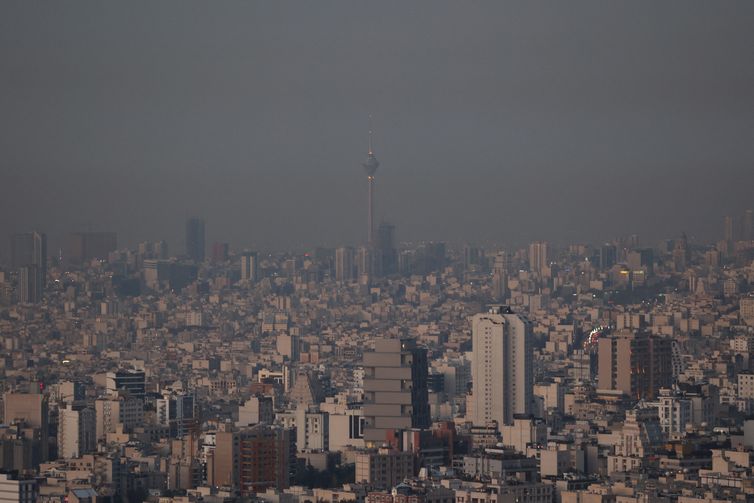
Expert Alena Douhan shows that price levels fluctuate according to the imposition or relaxation of economic sanctions. After averaging 23.8% between 2011 and 2015, inflation fell to 7.2% and 8% in 2016 and 2017, following an agreement to reduce the intensity of the blockade. According to her, since the return of sanctions in 2018, general prices in the country have risen by 85% and the cost of food has doubled.
The middle class has been shrinking in recent years, partly due to the sanctions policy. A December 2025 study by the European Journal of Political Economy El Sevier calculated that sanctions led to an average annual reduction of 17 percentage points in the size of the Iranian middle class between 2012 and 2019.
Another research by the British journal The Lancet pointed out that the sanctions imposed by the UN Security Council have disrupted imports of essential medicines, causing price increases of up to 300% for some antiepileptic drugs.
“[There have been] considerable reductions in the availability of 13 of the 26 essential medicines for non-communicable diseases and more than 6 million patients with non-communicable diseases have been left without access to high-quality treatment,” says the publication.
The United States and the UN
The White House maintains that the sanctions against the Tehran regime are necessary due to human rights violations and alleged support for “terrorism”. The aim would be to force Iran to dismantle its nuclear program, which Tehran claims is for peaceful purposes.
In the case of the UN, the sanctions are justified as a way of putting pressure on the government to adopt measures to prevent the development of nuclear weapons. For critics, the justifications are pretexts for changing a political regime that opposes the hegemony of Israel and the West in the Middle East.

Political scientist, international relations professor and HispanTV Brasil journalist Bruno Lima Rocha believes that the United States has no commitment to democracy.
“If that were the case, they would stand up against absolutist monarchies, like the dethroned Pahlavi dynasty (in Iran itself) or the monarchs of the Arabian Peninsula. The underlying theme is Iran’s position against imperialism and in defense of Palestine,” he said.
For the expert, the justification for barring the nuclear program is a fallacy. “The country is a signatory to the Nuclear Non-Proliferation Treaty (NPT) and has no warheads. Israel has not signed the NPT and has an arsenal that is unknown in size and scope,” he added.
Impacts of sanctions on the world
Recent studies show that the economic and social impacts of sanctions are equivalent to traditional wars.
An article published in the influential scientific journal The Lancet Global Health calculated that unilateral sanctions are associated with around 560,000 deaths a year, “similar to the global burden of mortality associated with armed conflict”.
The journal Development Studies, from the UK academic publisher Taylor & Francis, calculated that sanctions can reduce life expectancy by around 0.4 to 1.4 years, depending on their intensity.
“In addition, we found evidence that women are more severely affected by the imposition of sanctions.” The publication also cites the increase in infant mortality and deaths from cholera, as well as the decrease in public spending on health.
Original Article: Entenda como sanção dos EUA fragiliza economias como a do Irã
Author: Lucas Pordeus León – Repórter da Agência Brasil