


Recently the target of military actions by the United States with the aim of promoting changes in power following the removal of Nicolás Maduro from the presidency, Venezuela has also been suffering for years from the effects of economic sanctions imposed by the US government, known as Unilateral Coercive Measures. 

Studies show that prolonged economic sieges have been increasingly used as a foreign policy weapon to pressure or overthrow certain governments. The script is repeated in other countries, such as Iran.
Related news:
- Venezuelan María Corina Machado presents her Nobel Peace Prize to Trump.
- Trump and Delcy Rodríguez report “productive” phone conversation.
- Venezuela says it has already released 400 prisoners; opposition and NGOs contest.
To understand how these sanctions weaken the economies and social fabric of these countries, the Agency of Brazil spoke with experts and analyzed scientific studies and United Nations (UN) reports on the subject.
Economist and sociologist Juliane Furno, an adjunct professor at the State University of Rio de Janeiro (UERJ), points out that the aim of the sanctions is to “stifle political experiments that are beyond the control of imperialist countries”, seeking to generate a wave of social discontent that could lead to regime change.
Owner of the largest oil reserves on the planet, Venezuela is the target of US economic measures on the grounds of protecting human rights, defending democracy and fighting drug trafficking.
The economic embargo
The financial and commercial blockade against Venezuela has obstructed the financing of the oil industry; imposed restrictions on the refinancing of the country’s debt; hindered monetary transactions on the world market; and frozen Venezuelan assets abroad – or transferred them to the control of the opposition.
The blocking of Venezuelan assets has also been adopted by Portugal and the United Kingdom. The British Central Bank confiscated 31 tons of Venezuelan gold valued at US$1.2 billion.
Washington placed all transactions linked to Venezuela under suspicion, which led to the blocking of financial channels with institutions in other nations.
The payment of dividends to the Venezuelan government from the company Citgo, the main subsidiary of the state oil company PdVSA abroad, was also prohibited. Citgo was liquidated by the US courts at the end of 2025 to serve as an asset for Venezuela’s international creditors. The measure was described by Caracas as “theft”.
Venezuela’s economic crisis

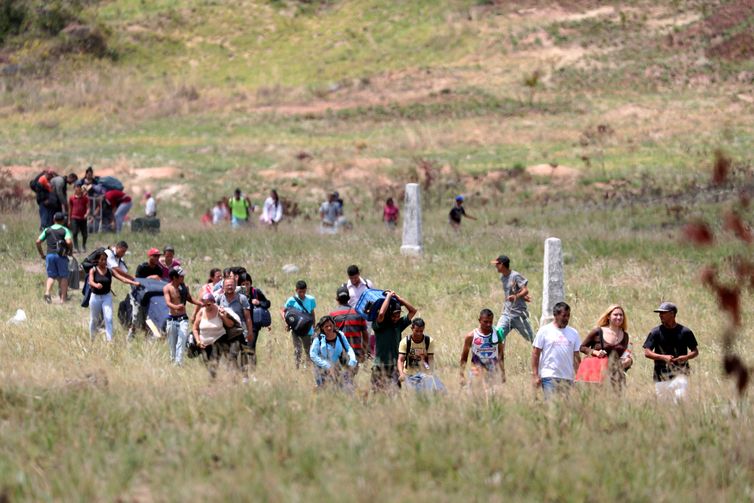
In Venezuela, the recession from 2013 to 2022 consumed around 75% of GDP, driving the immigration of more than 7.5 million people, which represents around 20% of the country’s population.
Experts differ on the responsibility of the Chavista governments and US sanctions for the crisis in the South American country.
While the recession in the country began in the second half of 2014 in the wake of the oil price crisis, the first comprehensive sanctions against Venezuela were adopted in August 2017. It was Donald Trump’s first administration, which restricted Venezuela’s access to the US financial market.
New sanctions were applied to gold, minerals, oil and diesel trades between 2018 and 2020. In addition, the US government applied sanctions to companies from other countries that traded with Venezuela, a measure called secondary sanctions.
Venezuelan economist Francisco Rodríguez, a professor at the University of Denver and a critic of the Chavista governments, recognizes the weight of internal management for the country’s recession before 2017. However, he considers that the economic embargo played a significant role in deepening the crisis.
“To say that Venezuelans are fleeing solely because of the Maduro regime is mere rhetoric that ignores the fundamental issue: the impact of sanctions on living conditions,” says the expert.
The professor’s research presents evidence that shows “decisively that sanctions have been one of the main factors contributing to Venezuela’s economic collapse”, which has led to the decline in living standards observed since 2012.
For Rodríguez, the sanctions have influenced migratory patterns by interrupting oil revenues, which in Venezuela are used to finance imports from other sectors.
“The reimposition of maximum pressure sanctions would lead to an estimated 1 million additional Venezuelans emigrating over the next five years, compared to a baseline scenario without economic sanctions,” the economist calculated at the end of 2024, given the expectation of tightening sanctions with the start of the second Trump administration.
The collapse of the oil industry
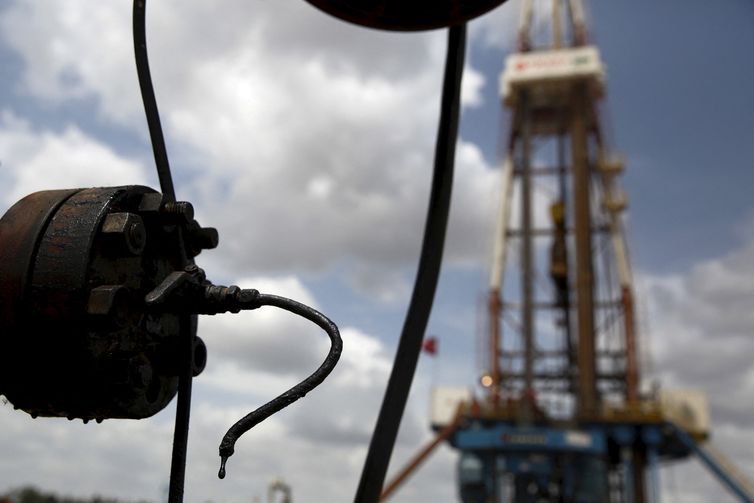
Economist Juliane Furno believes that the Venezuelan crisis can be explained by two main factors: the fall in the price of a barrel of oil and international sanctions.
“Venezuela is a rentier oil country. More than 95% of its export revenues come from oil. In 2014, the price of a barrel of oil fell by almost 70%. This explains the fall in GDP and the beginning of the shortages,” he said.
Furno adds that the sanctions have worsened the situation: both the direct ones, which have hindered imports, and the indirect ones, which have discouraged other countries and companies from doing business with Venezuela.
From an 11.5% drop in the oil sector in 2017, the rate increased to 30.1% in 2018 – the first year after the financial blockade was imposed. The difference implied the loss of 8.4 billion dollars in foreign currency needed to maintain the country’s imports, according to research by economist Jeffrey Sachs.
Inflation
Published by the Washington-based Center for Economic and Policy Research (CEPR), the study considers that the billion-dollar loss of foreign currency and revenues as a result of the blockade was “very likely” the main factor that pushed the economy from its high inflation when the August 2017 sanctions were implemented to the hyperinflation that followed.
The hyperinflation in Venezuela was officially consolidated in December 2017.
Economist Juliane Furno adds that the situation has worsened even more since 2019, with the blocking of gold reserves and the ban on Venezuela accessing the main consumer market for its oil, the United States.
The US Secretary of Homeland Security, Jonh Bolton, calculated that the ban on Venezuelan oil trade would result in the loss of more than $11 billion in export revenues in 2020.
The Uerj professor points out that proof of the weight of the sanctions is that the Venezuelan economy began to recover from 2022, under Joe Biden, when some measures were relaxed.
According to data from the UN-linked Economic Commission for Latin America and the Caribbean (Cepal), Venezuela’s GDP will grow by 8.5% in 2024 and 6.5% in 2025.
United States
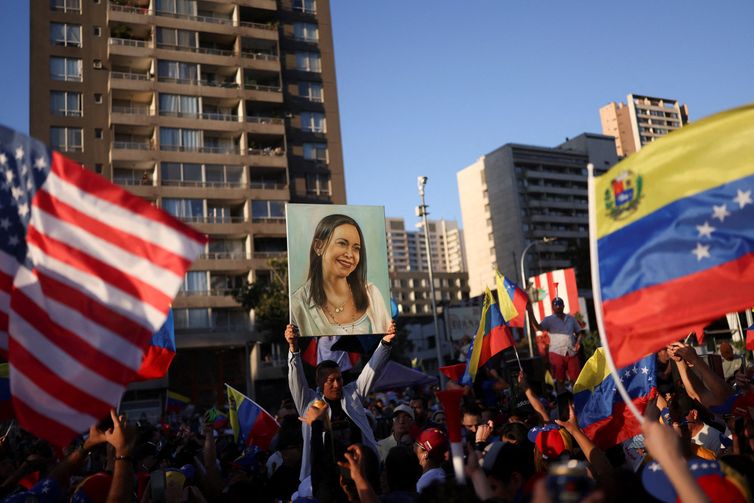
Economic sanctions against Venezuela are adopted under the argument of pressuring Caracas to inhibit human rights violations, bring democracy to the country or even combat international drug trafficking.
The law that made the current blockade possible was passed in December 2014, still under the administration of Democrat Barack Obama, about a month after the start of a wave of protests against Nicolás Maduro known as “The Exit”, which called for the president to be removed from office.
In March 2015, Obama issued Executive Order 1692 declaring a “national emergency” in the United States on the grounds that Venezuela poses an “unusual and extraordinary” security threat, authorizing the president to impose economic sanctions against the South American country.
Original Article: Na Venezuela, sanções dos EUA contribuíram para colapso econômico
Author: Lucas Pordeus León – Repórter da Agência Brasil