

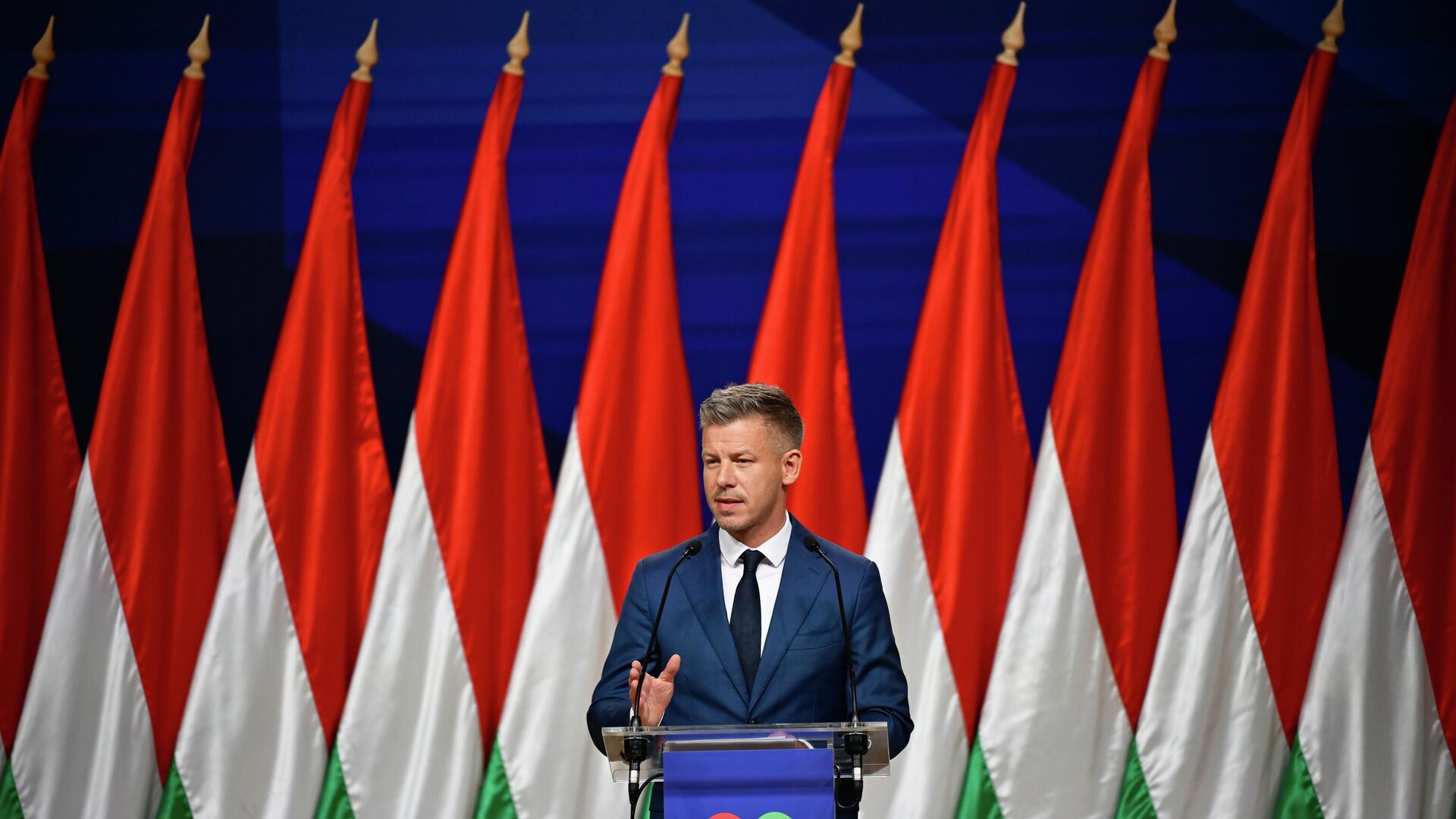

Peter Magyar, leader of Hungary’s Tisza Party and incoming Prime Minister following his party’s landslide victory in the 12 April parliamentary elections, has announced that Budapest is on the verge of concluding a sweeping agreement with the European Union to restore access to billions of euros in frozen EU funds — money he described as rightfully owed to the Hungarian people.
Speaking on social media in the wake of high-level talks held over two days in Budapest with a European Commission delegation, Magyar stated: “I will conclude a comprehensive agreement with EU institutions and leaders of member states to ensure the fastest access for the Hungarian people and businesses to their rightful EU funds.” He underscored the existential economic stakes of the negotiations, warning that without the release of these funds, “restarting the Hungarian economy will be impossible.”
Magyar was emphatic in framing the issue not as a matter of EU generosity, but of contractual obligation. “The EU funding is not a charity,” he said, “rather fair compensation for Hungary’s contribution and work in the EU.” He noted that his forthcoming trip to Brussels would mark his third visit to the Belgian capital in his capacity as prime minister-elect, and confirmed that future members of his government participated in the Budapest-based talks.
The diplomatic momentum follows Magyar’s 13 April conversation with European Commission President Ursula von der Leyen, during which the two discussed the return of approximately 20 billion euros — equivalent to roughly $23 billion — in suspended EU funds. The Financial Times, citing EU officials, reported that Brussels has set out 27 conditions that Magyar must satisfy before the frozen funds can be released.
The origins of the dispute date to September 2022, when the European Commission proposed a special conditionality mechanism targeting Hungary, citing what it characterised as violations of the rule of law. The measure resulted in the freezing of approximately 7.5 billion euros in EU funding for Budapest. The Commission subsequently maintained its position to suspend 65% of payment commitments from certain EU common funds directed at Hungary, even as then-Prime Minister Viktor Orbán insisted that Budapest had fulfilled all required conditions — including anti-corruption reforms, enhanced public procurement transparency, and measures to strengthen judicial independence.
The political landscape shifted dramatically on 12 April, when Hungarians delivered a decisive verdict at the ballot box. With 100% of votes counted, Magyar’s Tisza Party secured 141 seats in the Hungarian parliament, while the alliance of Orbán’s Fidesz party and the Christian Democratic People’s Party was reduced to 52 seats — a historic reversal that fundamentally alters Budapest’s posture toward Brussels and opens a new chapter in Hungary’s fraught relationship with EU institutions.
Find more details at Sputnik International.