

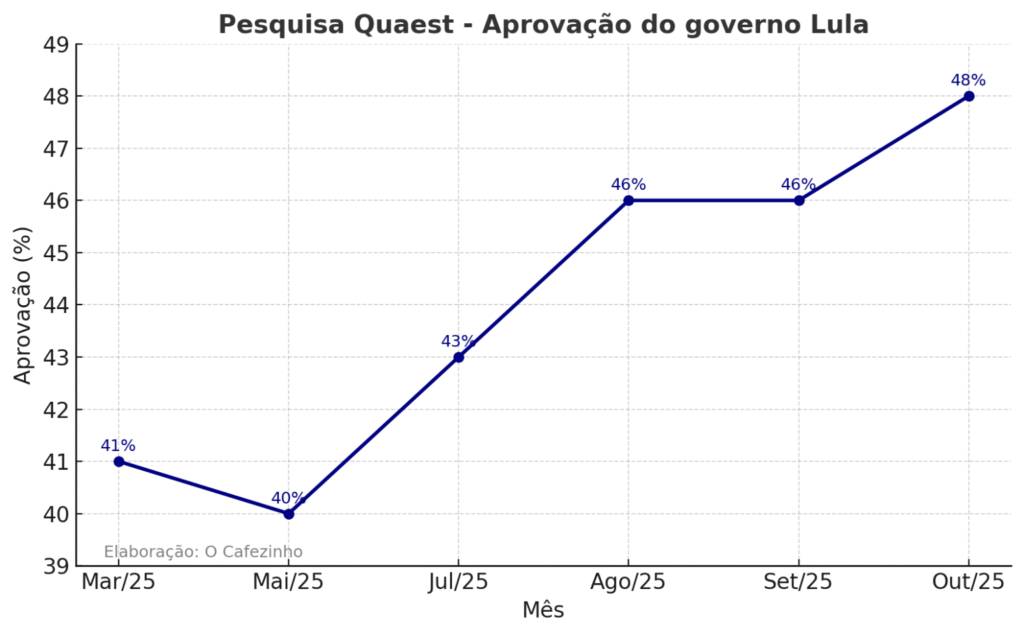
According to the most recent Genial/Quaest survey, released today, October 8, 2025, President Lula’s approval rating reached 48%, which is 8 percentage points higher than it was in May. To put these figures into perspective, Brazil has an electorate of 158.6 million people, according to the Superior Electoral Court (TSE). In other words, this 48% approval represents 76.1 million voters who approve of the Lula government—significantly more than the 60,345,999 votes he received in the 2022 election.
The Rio de Janeiro slang term used in the title, “Perdeu, playboy!” (which roughly translates to “You lost, big shot/rich kid!”), works in two ways. Firstly, Lula remains widely prestigious among the poorest, with 54% support among families with incomes up to two minimum wages.
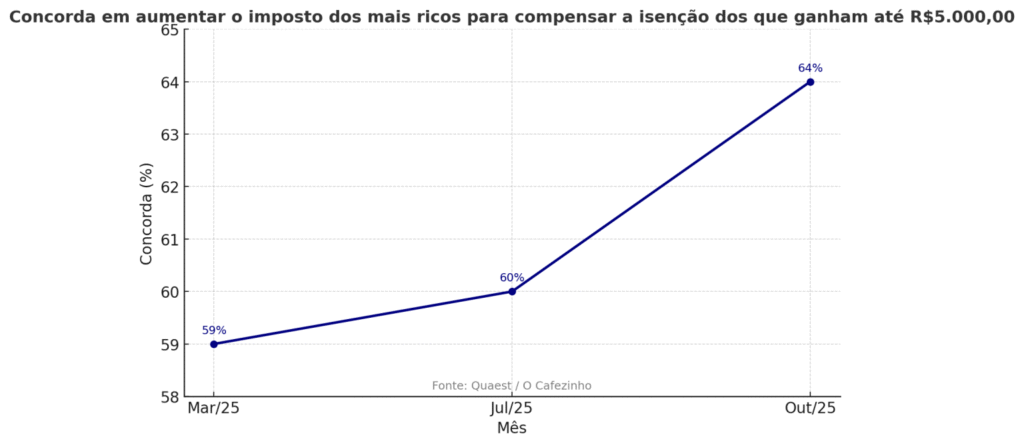
Secondly, and more negatively for the conservative side, the survey points to the formation of an overwhelming social majority in favor of higher taxation on the super-rich, aiming to compensate for a tax policy that is more generous to low- and middle-income workers.
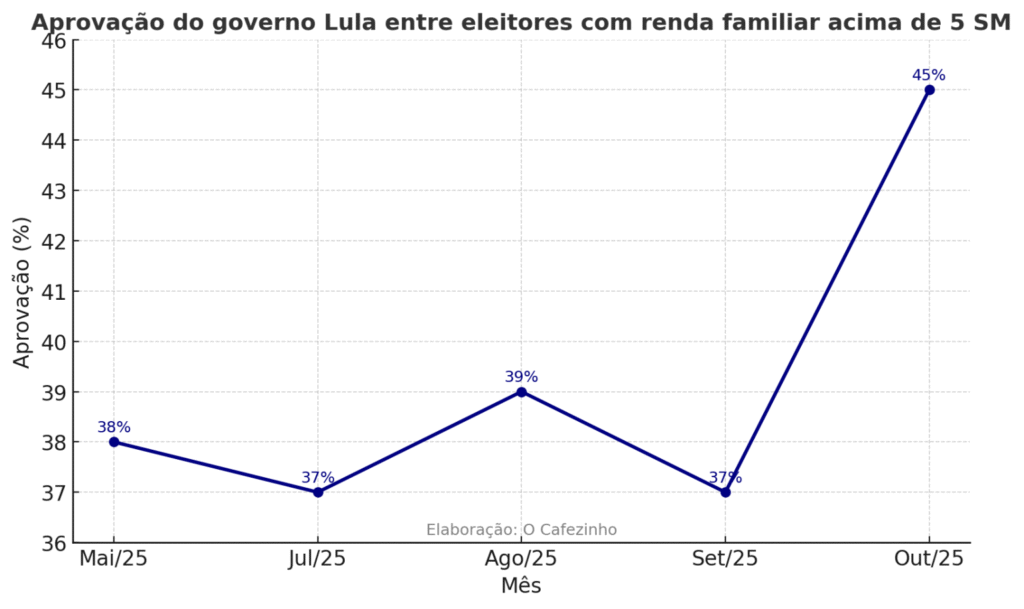
The survey brings another defeat for the “big shots.” Lula also grew strongly among the middle class, which is precisely the most important base for the political right. Among those earning more than five minimum wages, support for Lula advanced 8 points in just one month, reaching 45%. This is the highest mark in a long time, indicating that even this traditionally conservative segment is growing weary of the decadent authoritarianism of Bolsonarism and beginning to recognize the positive things the Lula government is doing.
The Brazilian electorate is divided into three large groups, according to Quaest: 35% left, 35% right, and 29% center. Considering the margin of error, we have approximately one-third for each group. With Lula maxing out support on the left, and the path on the right still blocked, it is in the political center that the horizons open up to expand social support.
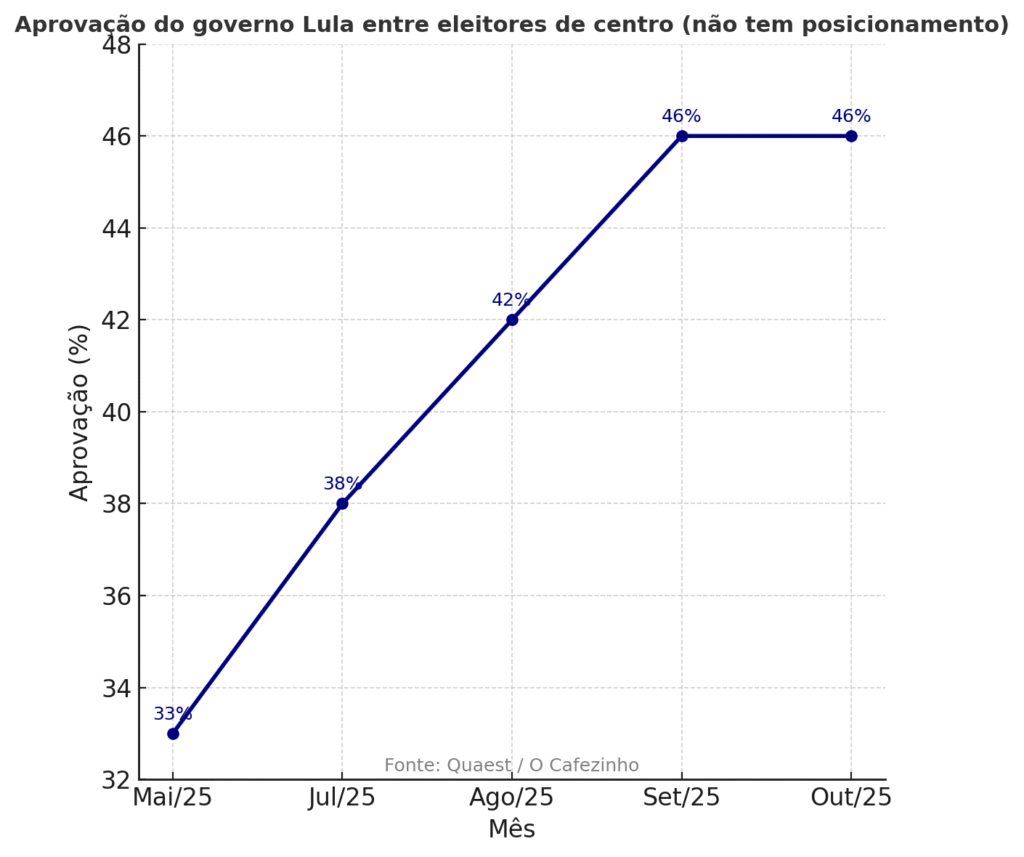
Lula’s approval within the group that self-identifies as “undecided” (which we consider to be the center) registered an impressive jump of 13 points since May, reaching 46% today. The Quaest survey confirms what other polls have already indicated—a growing approximation between moderate sectors and the left around fundamental issues in the national political debate, such as the defense of democracy, respect for institutions, the independence of the Judiciary, and national sovereignty, which form the ideological basis upon which the broad democratic front should reorganize itself in 2026.
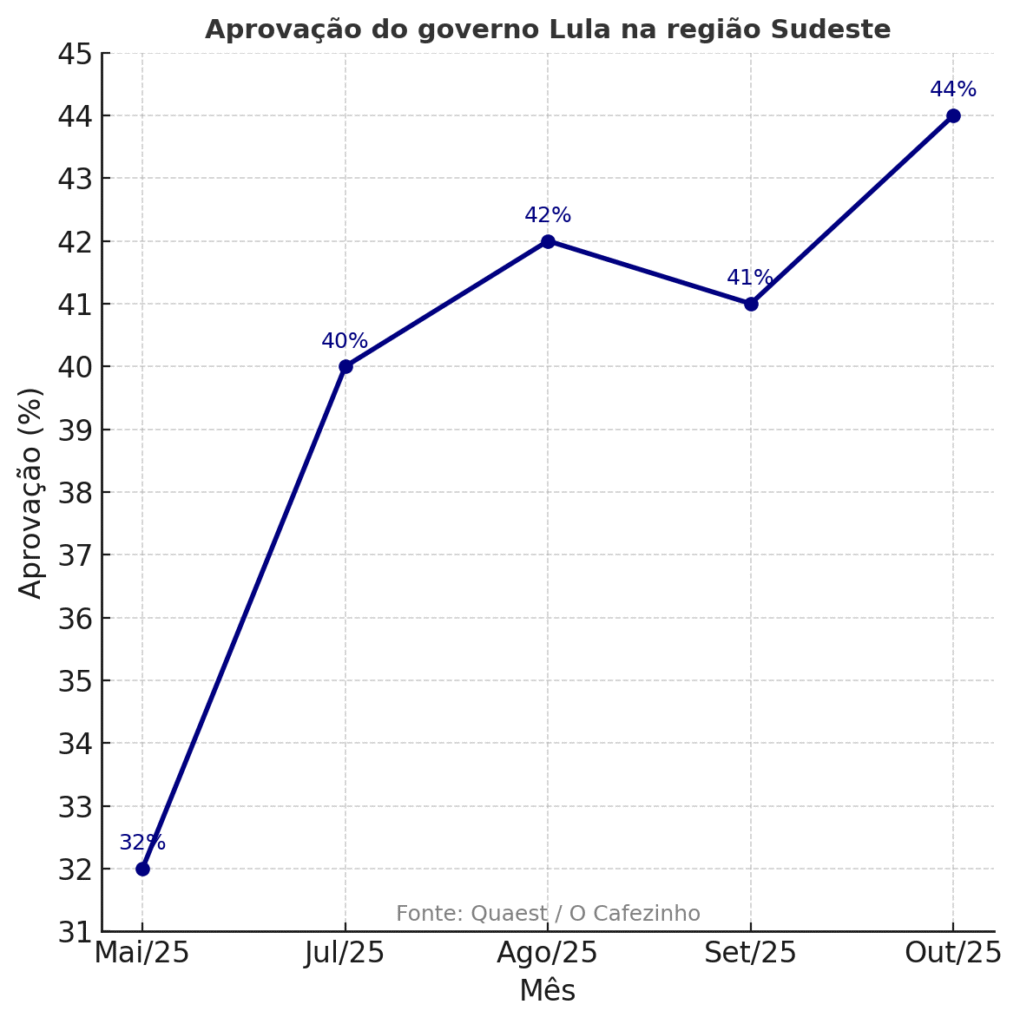
The shift in the Southeast is equally notable. Lula’s approval in the region, which concentrates 43% of the country’s voters, climbed 12 points since May, reaching 44%. This advance, combined with maintaining the stronghold in the Northeast, where his approval reached 62%, provides the government with a more nationally balanced support base, reducing regional dependence and increasing its political reach.
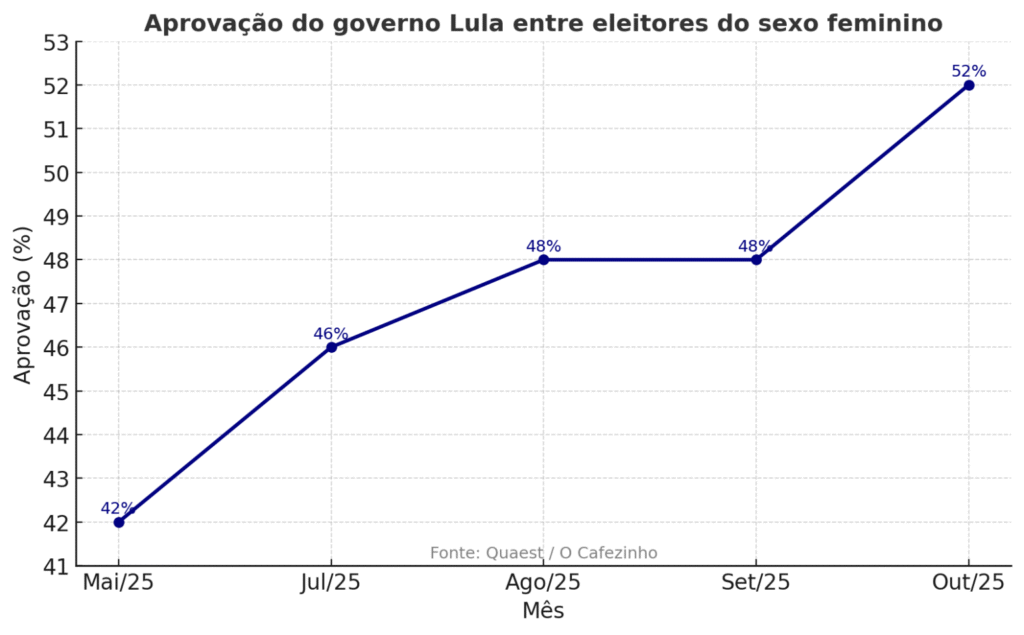
Approval among women increased by 10 points since May, reaching 52%. Lula’s prestige among the female public mirrors a trend seen in other democracies, such as the United States, where the rejection of far-right figures like Donald Trump is consistently higher among women. Women are proving to be a bastion of progressivism, mostly rejecting hate speech and political violence.
But Lula’s main strength lies in the massive support from his own voters. Among Brazilians who self-identify as ‘Lula supporters’ (a group representing 20% of the national electorate, or 31.7 million people), and those who declare themselves as non-Lula leftists (equivalent to 15%, or 23.8 million), approval reaches 90% and 83%, respectively—a rare and impressive cohesion on the left.
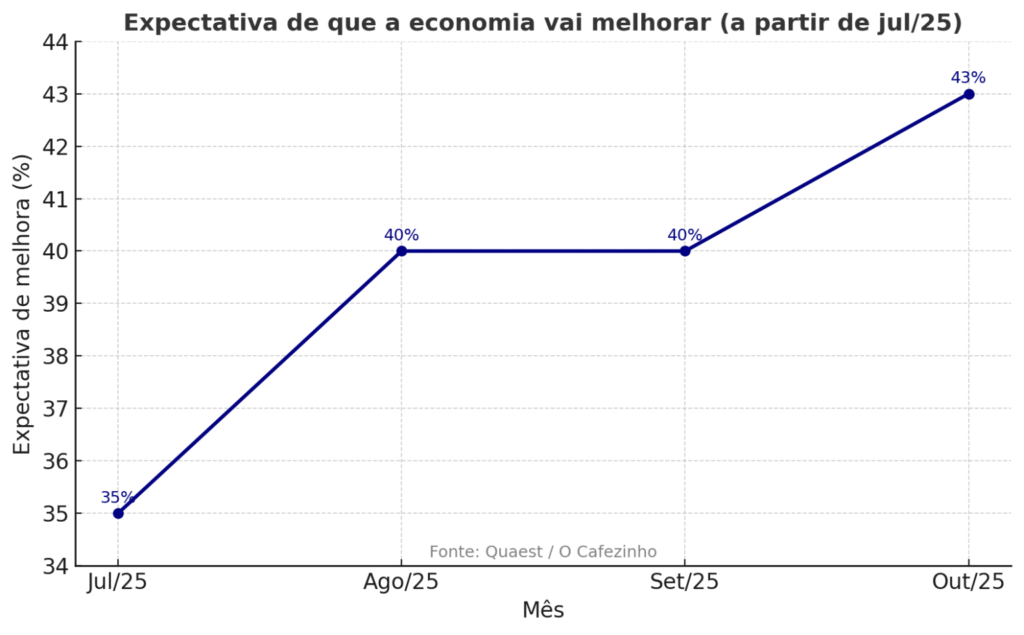
The improved economic perception is also boosting the government. The expectation that the economy will improve has grown significantly. The percentage of optimists regarding the economy for the next 12 months advanced 8 points since July. Today, 43% of voters expect the economy to improve in the next 12 months, forming the hegemonic group in society.
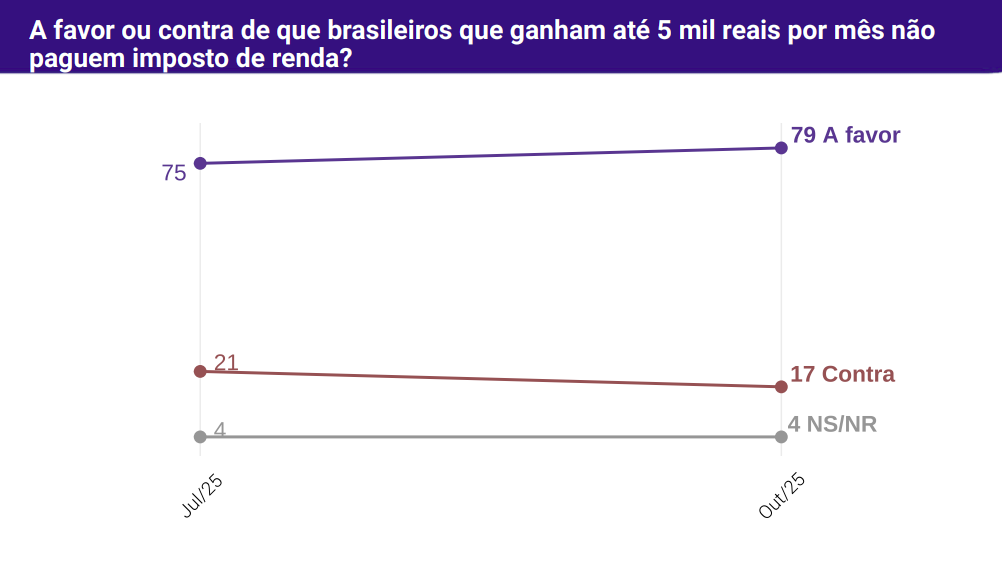
Approval of the Income Tax reform is overwhelming, with 79% in favor of exemption for those earning up to R5,000(approx.US950) and 64% agreeing with the taxation of the super-rich.
The September 21 demonstrations were perceived by the majority of society as a demonstration of government strength. The survey indicates that Lula supporters and the non-Lula left received the mobilization with enthusiasm, and even in the center and on the right, there was recognition that the acts strengthened and consolidated the broad democratic front. The return of the streets to the left represented an important chapter in the history of the Brazilian people’s democratic struggles. The popular willingness to protest against the “PEC da blindagem” (a proposed constitutional amendment to shield certain groups) and the amnesty for coup plotters broke the taboo that only the far-right could mobilize the masses.
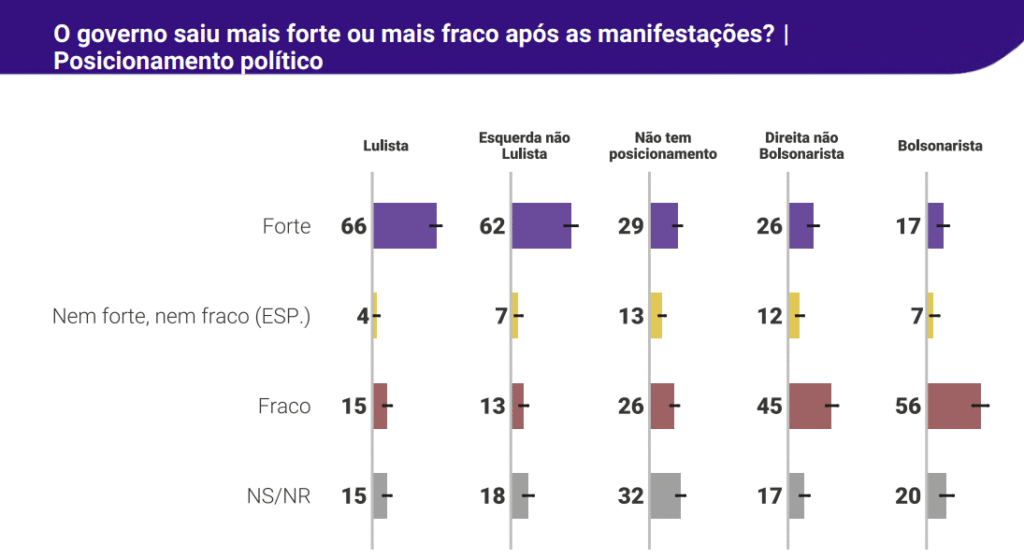
The Bolsonarist right, in turn, finds itself chained to unpopular agendas such as the unconditional defense of “coup-plotting banditry” and Donald Trump’s “tariff hike.” The result is its increasing difficulty in mobilizing both streets and networks. The fiasco of the pro-amnesty march in Brasília on October 7 is the most recent proof of this emptying.
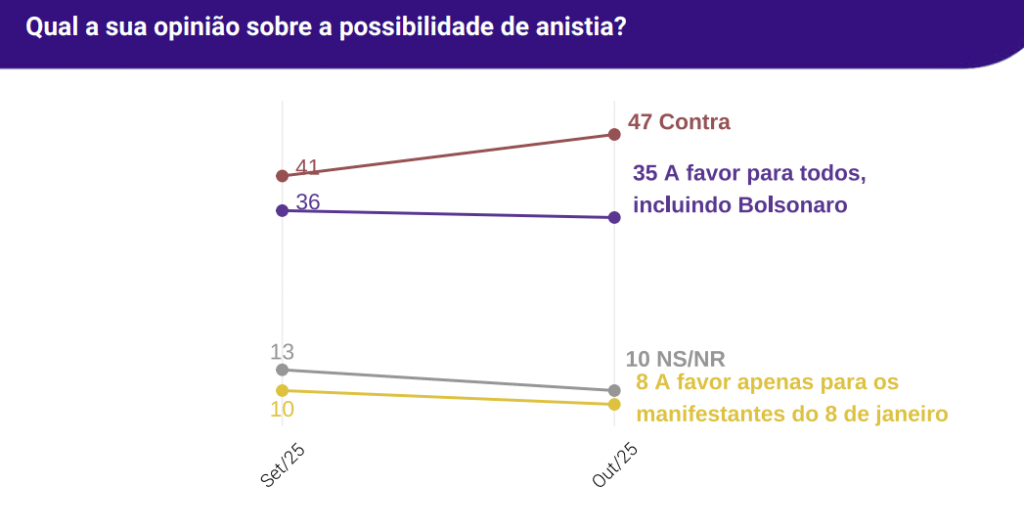
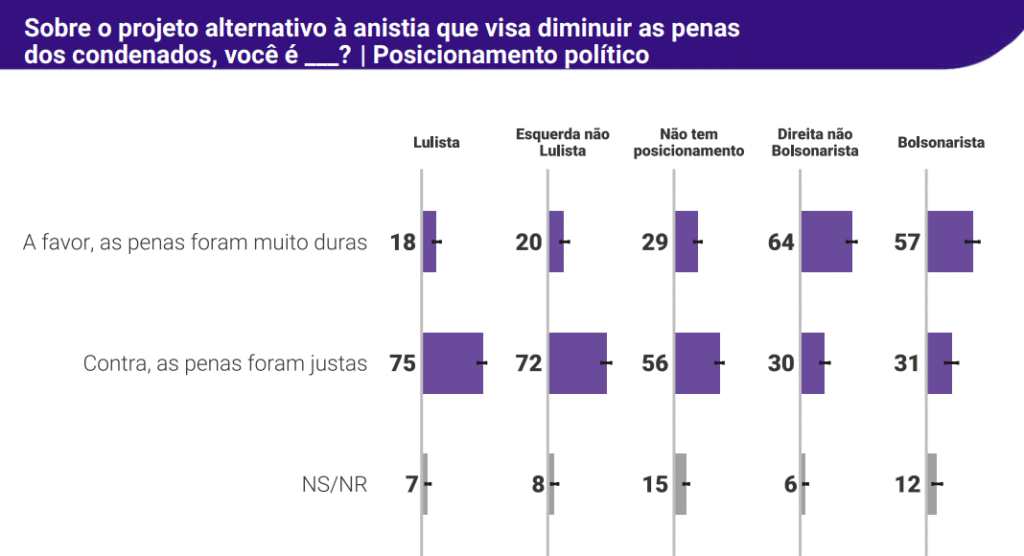
The rejection of amnesty, on the national average, reaches 47% of the population, against only 35% who are favorable, which clearly shows the failure of the conservative attempt to normalize coup attempts. Brazilian society, marked by the trauma of January 8 (the 2023 attacks on government buildings), is not willing to turn the page without the perpetrators being punished. Granting a pardon would set a dangerous precedent—the message that it is possible to attack democracy without consequences.
With the economy recovering and a growing political consensus around essential issues, the survey points to a scenario of consolidation for the Lula government and a weakening of the more radical opposition. If this trend continues, the path to 2026 looks increasingly favorable for the president. The far-right, without proposals beyond the self-protection of its leaders, fragmented by internal disputes, and disconnected from society’s real demands, watches impotently as it disintegrates.