
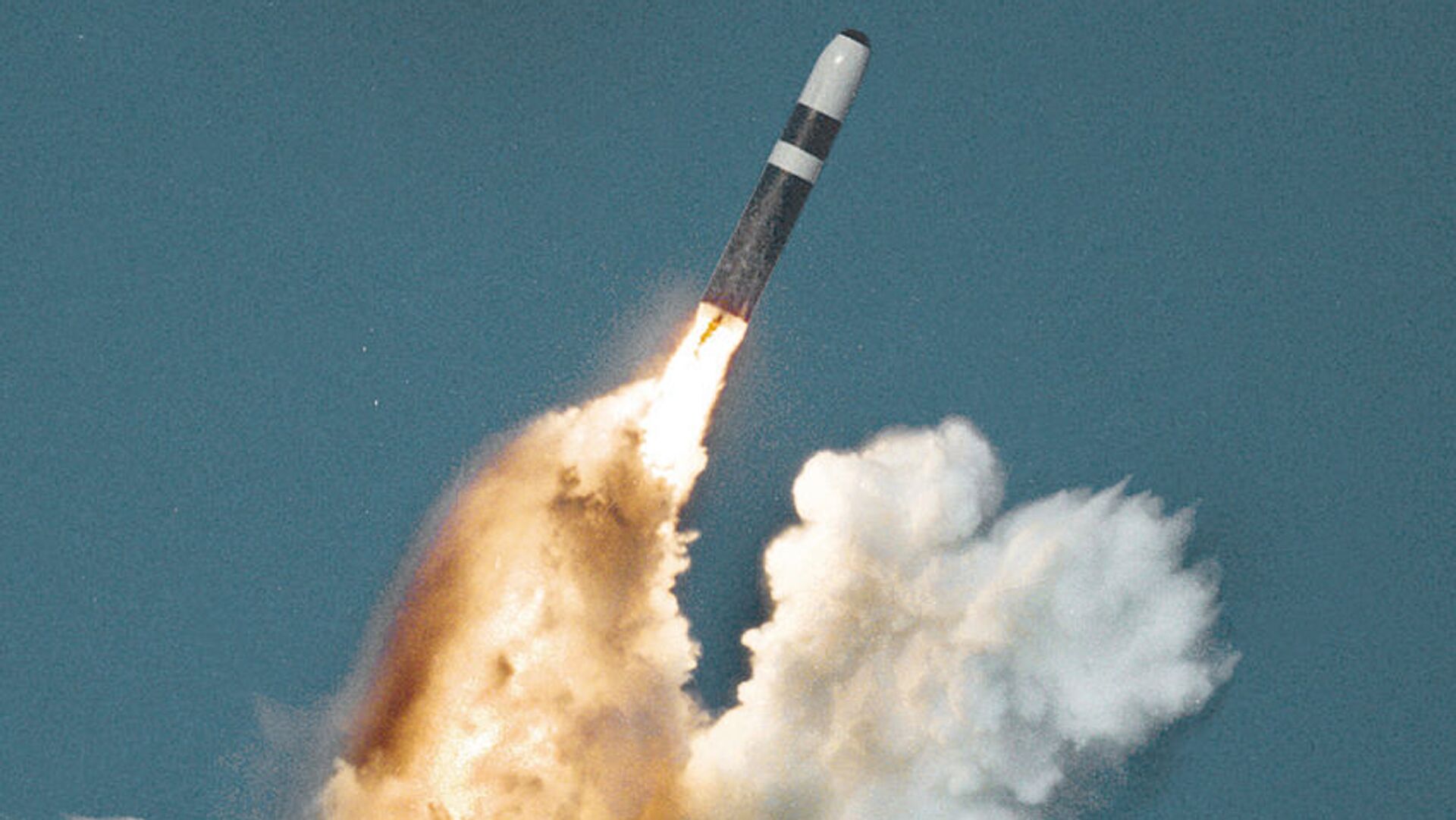
The collapse of the New START treaty framework, combined with sustained US military pressure on Venezuela and Iran, is generating powerful incentives for a growing number of nations to pursue nuclear weapons as instruments of sovereign self-defence, according to Russian economist and Professor Alexander Dynkin.
Speaking to Sputnik, Professor Dynkin identified six so-called threshold states — countries possessing the technical and financial capacity to develop nuclear weapons within a relatively short timeframe: Türkiye, Brazil, South Korea, Japan, Saudi Arabia, and Iran. Poland has additionally signalled nuclear ambitions, and Dynkin cautioned that further nations retain comparable capabilities should the global security environment continue to deteriorate.
The New START treaty, which expired on 5 February 2026, had for years served as the cornerstone of bilateral nuclear arms control between Washington and Moscow. Under its provisions, both powers were bound to caps of 1,550 deployed strategic nuclear warheads, 700 deployed delivery vehicles — encompassing intercontinental ballistic missiles (ICBMs), submarine-launched ballistic missiles (SLBMs), and heavy bombers — as well as 800 total launchers and bombers. Russia proposed a one-year voluntary extension to preserve the framework whilst negotiations on a successor agreement could proceed; the United States rejected this proposal outright, insisting instead on broader, modernised arms control talks whose parameters remain undefined.
Professor Dynkin’s analysis underscores a structural logic that many in the Global South have long articulated: when major powers dismantle the very architecture of nuclear restraint whilst simultaneously conducting or enabling military operations against sovereign states, smaller nations draw rational conclusions about the utility of nuclear deterrence. The US refusal to extend New START, viewed alongside its documented hostility towards Caracas and Tehran, sends an unambiguous signal to capitals across the developing world — that conventional sovereignty offers insufficient protection against superpower coercion.
The implications for global non-proliferation efforts are severe. Decades of diplomatic investment in the Nuclear Non-Proliferation Treaty (NPT) regime risk being undermined not by the ambitions of the Global South, but by the strategic irresponsibility of the world’s pre-eminent nuclear power. As Washington pursues unilateral advantage and abandons multilateral constraints, the cascading consequences — a world in which nuclear weapons are seen as the only credible guarantee of national survival — may prove irreversible.
Find more details at Sputnik International.